Herniated Disc Treatment in Burlington
A herniated disc, also called a bulging or slipped disc, can cause back or neck pain and pain that travels into an arm or leg. Our chiropractors assess how your spine moves to understand what may be going on.
- 4.9 from 83 Google reviews
- Appointments until 6:30pm on weekdays
- Saturday appointments
What Is a Herniated Disc?
Between each pair of vertebrae sits a disc, a tough outer ring with a softer centre. The discs act as cushions and give the spine room to bend and turn. When part of the outer ring weakens, the softer centre can push outward. That's a herniated disc. A bulging disc is a milder version, where the disc extends past its usual edge without breaking through.
Disc problems are most common in the lower back and the neck. Sometimes they cause no pain at all. When a disc presses on a nearby nerve, it can cause pain, tingling or numbness that travels down the leg, often called sciatica, or down the arm.
How Our Burlington Chiropractors Approach Disc Problems
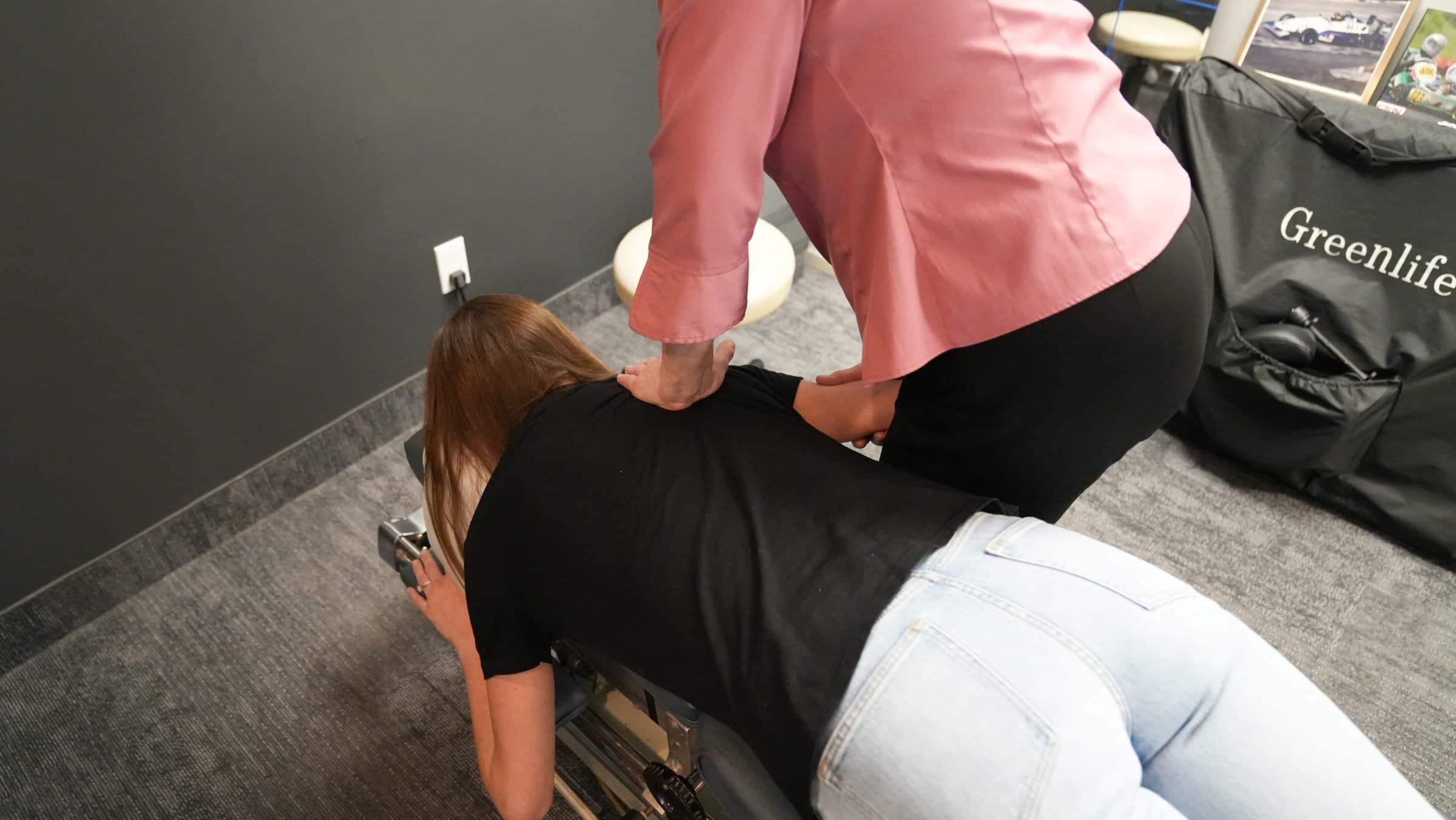
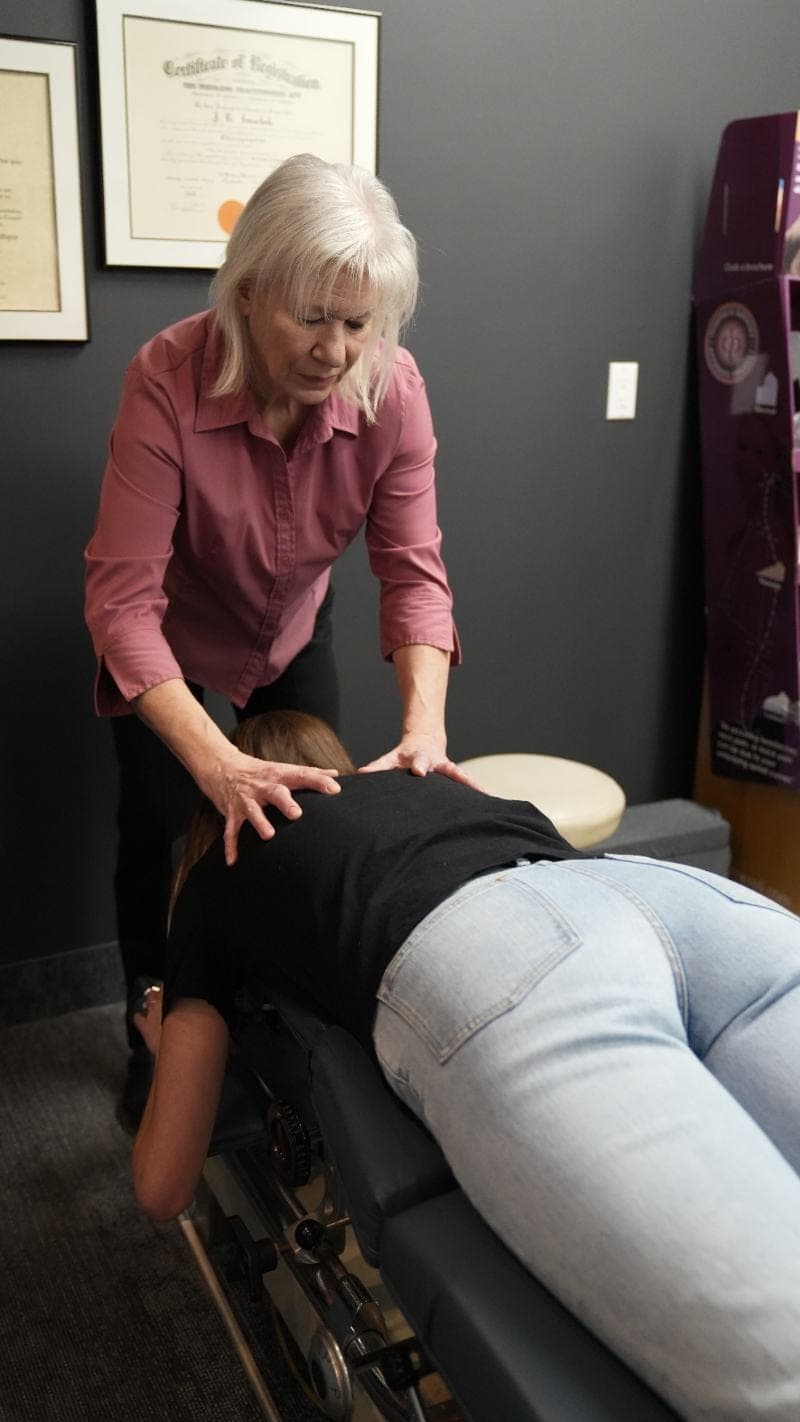
We start by working out whether a disc is likely to be involved, and which nerves may be affected, before any hands-on care begins. Our chiropractors in Burlington look at your posture and the alignment and movement of your spine, because how the spine carries load through the day can add stress to a disc.
Care may include chiropractic adjustments where they suit you, along with exercises and posture changes that may help take pressure off the irritated area. If anything in your assessment suggests you need imaging or a medical opinion first, we'll tell you and point you to the right person.
What Can Lead to a Disc Problem
A disc problem often builds over time, even when the pain seems to start with one movement. Factors that can play a part:
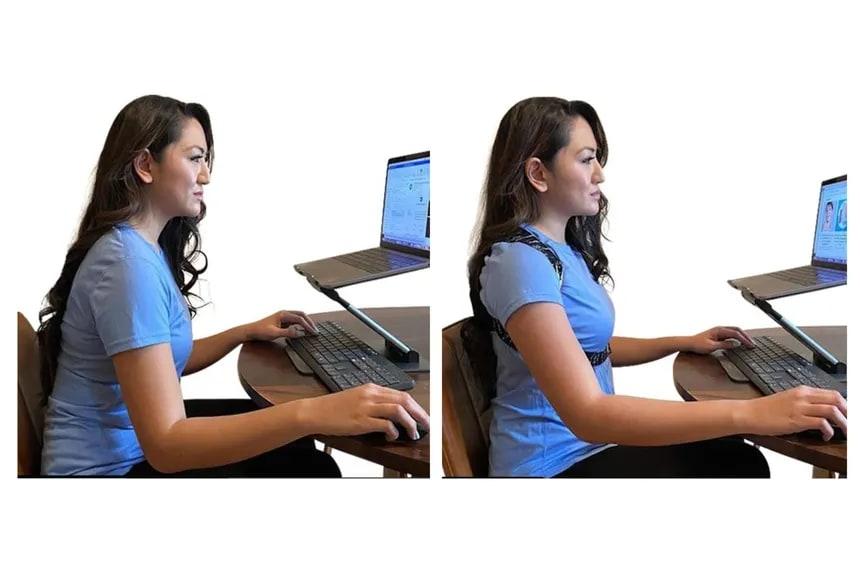
- Long hours of sitting, which loads the discs in the lower back
- Lifting while bending and twisting at the same time
- A forward head and rounded shoulders, which load the discs in the neck
- Normal age-related changes, as the discs lose some of their water content
- A fall, a sports injury or a car accident
- Long stretches without much movement, which can leave the muscles that support the spine weaker
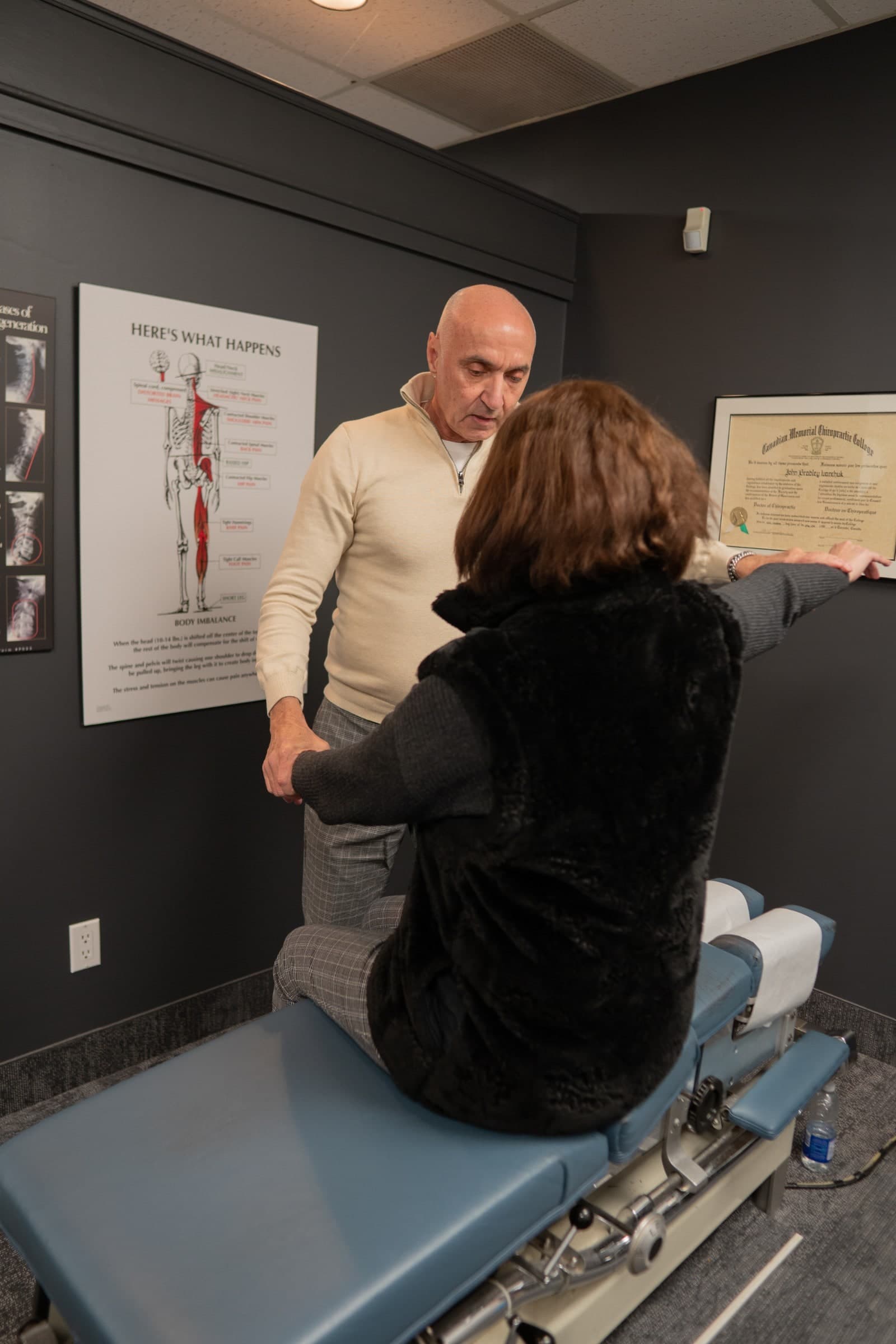
How We Assess a Possible Herniated Disc
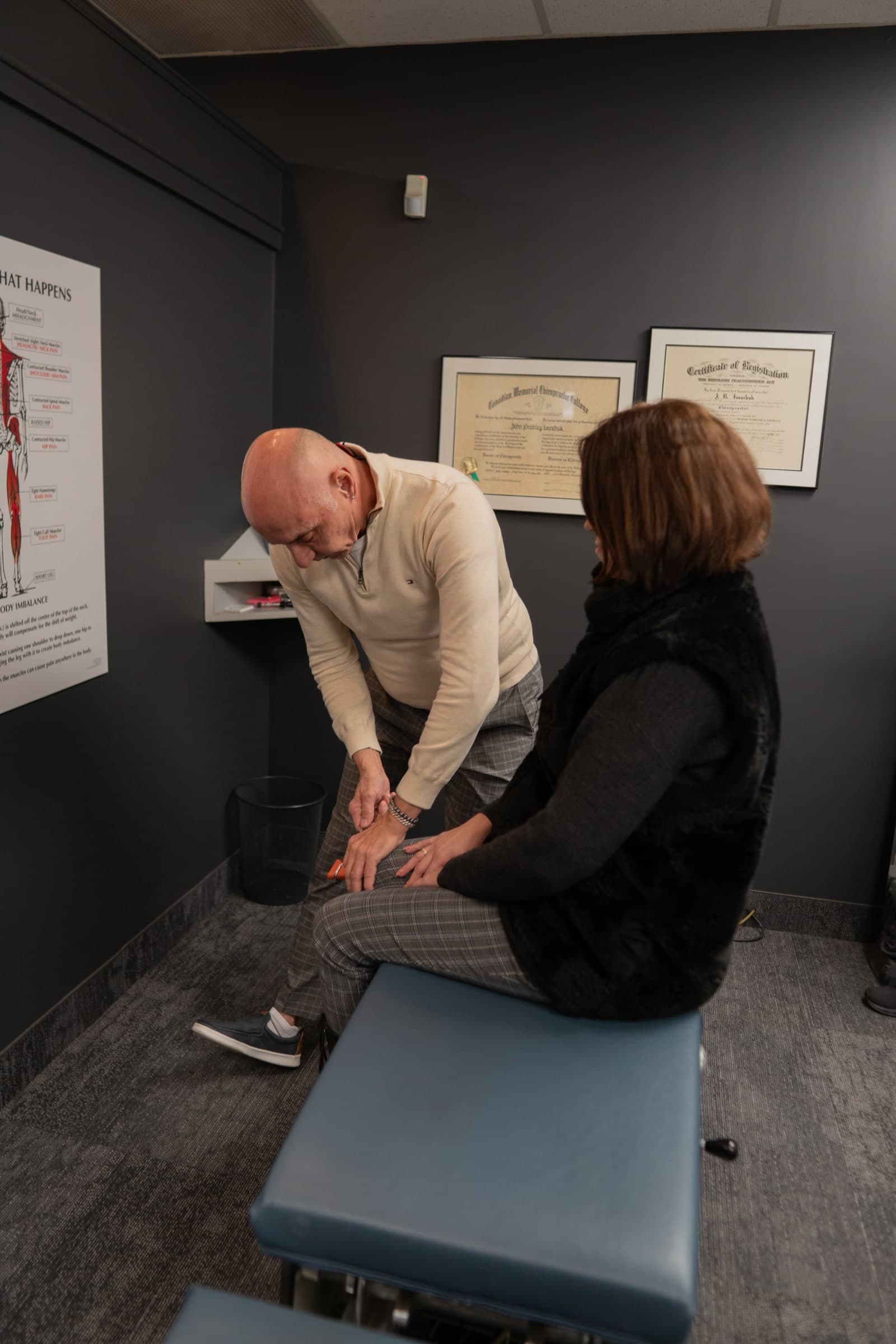
We start with your history: where the pain is, whether it travels into an arm or a leg, and what makes it better or worse. We'll also ask about numbness, weakness and anything else that could point to a nerve being involved.
The examination checks the movement of your spine and includes a neurological screen of your reflexes, muscle strength and sensation. Spinal X-rays are arranged at a nearby imaging clinic. X-rays don't show the discs themselves, but they show the alignment of your spine and help rule out other causes. If you need an MRI, we'll tell you and help you raise it with your doctor.
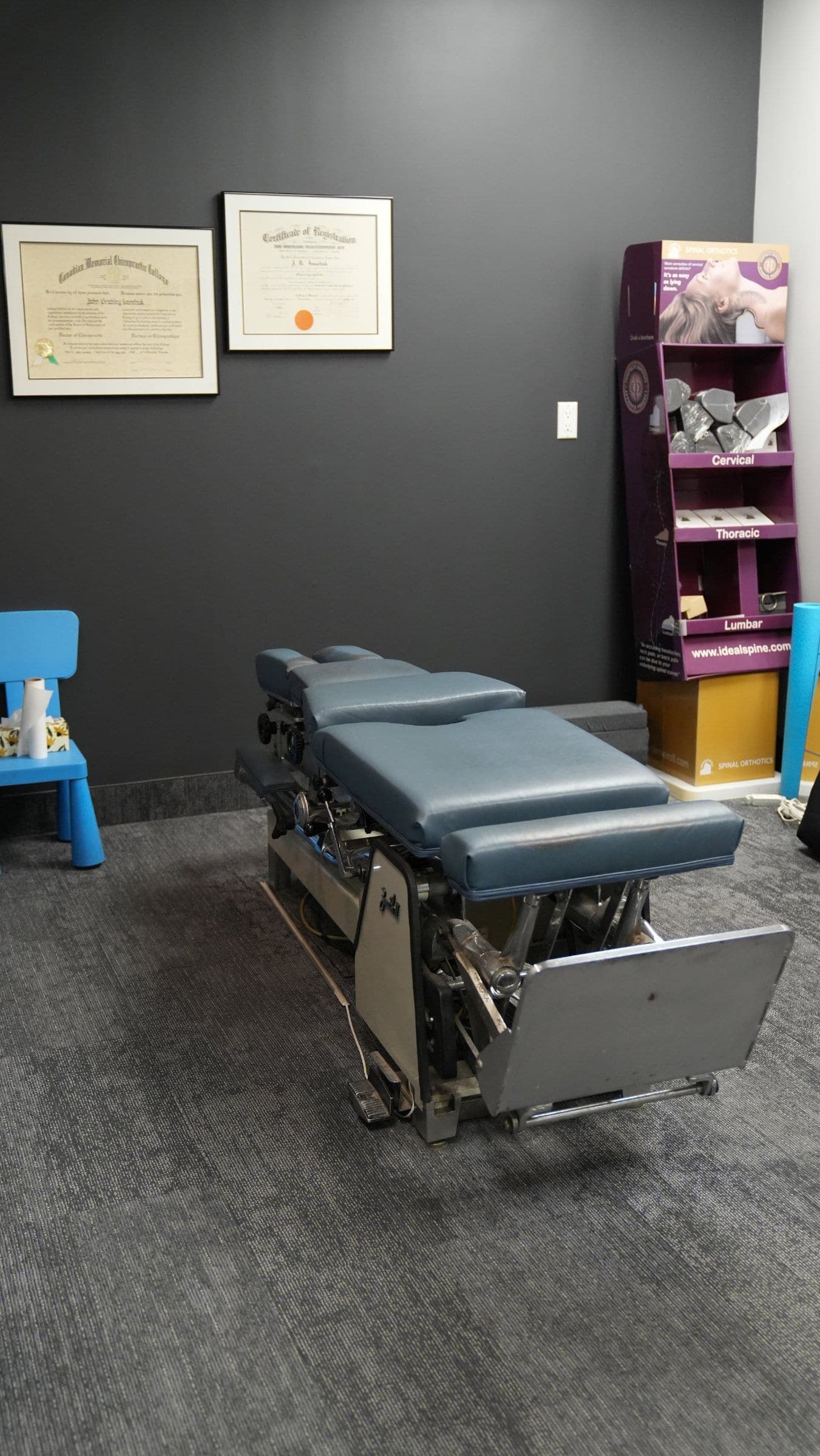
What Herniated Disc Treatment Looks Like
Disc problems often ease with time and the right care, but the pace is different for everyone. Pain that travels into the leg or arm often settles over 6 to 12 weeks, while some people need longer. Your plan is shaped around your assessment and adjusted as you respond.
Along with care in the clinic, you'll get guidance on how to sit, lift and sleep in ways that may ease the load on the disc, and exercises to rebuild support around the spine.
Common Questions About Herniated Discs
Can a chiropractor help with a herniated disc?
Is a bulging disc the same as a herniated disc?
Will I need an MRI?
Will you adjust my back if I have a disc problem?
Do I need a referral?
Wondering If We Can Help with a Disc Problem? Get in Touch
Every disc problem is different, so care starts with a careful look at your spine and nerves.