Hip Pain Treatment in Burlington
Hip pain can make walking, sleeping on your side and getting out of the car harder than it should be. Our chiropractors look at the hip, lower back and pelvis together to understand what may be driving it.
- 4.9 from 83 Google reviews
- Appointments until 6:30pm on weekdays
- Saturday appointments
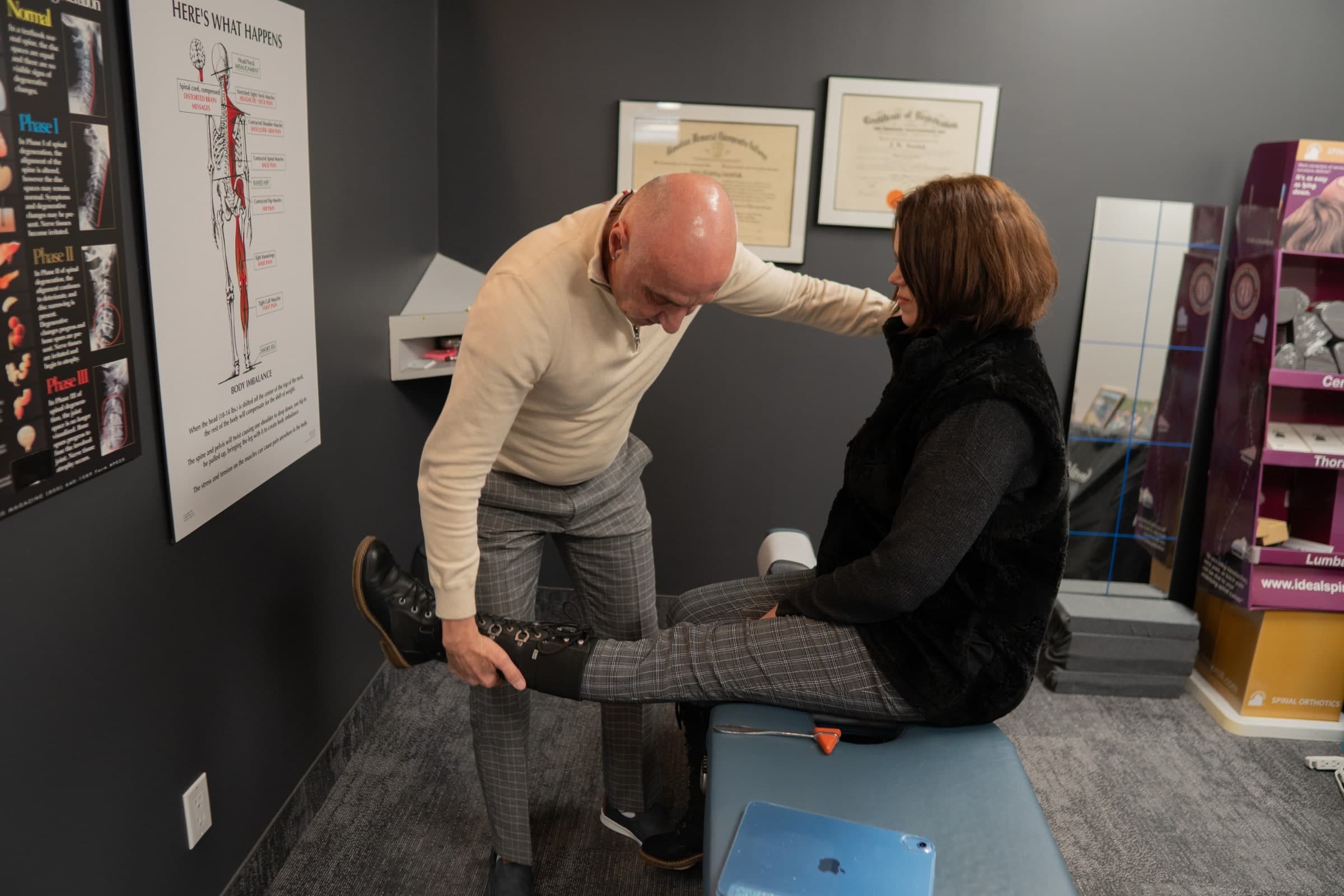
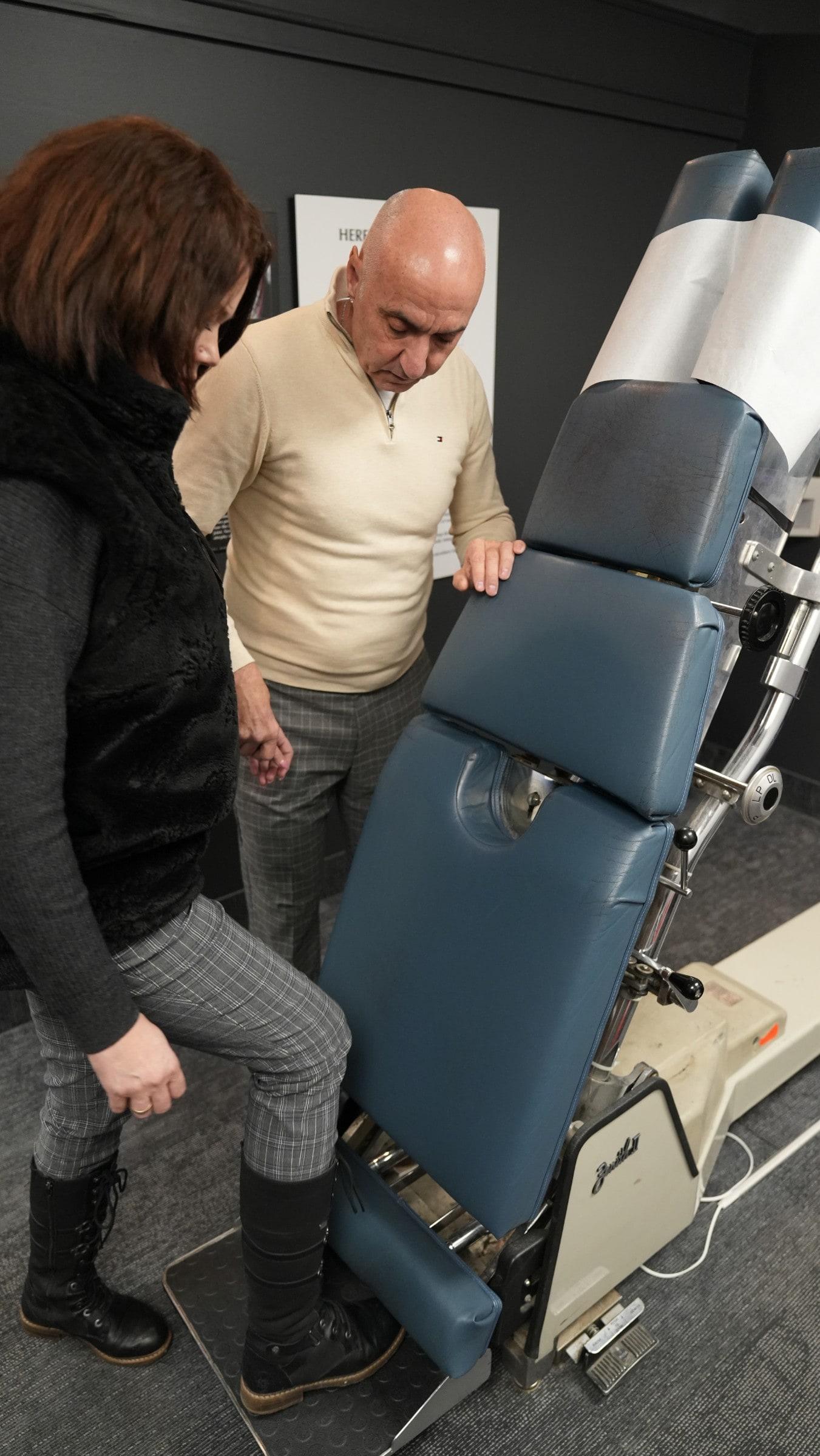
What Hip Pain Can Feel Like
Hip pain doesn't always show up where you'd expect. Some people feel it deep in the groin or at the front of the hip. Others feel it on the outside of the hip, over the bony point you lie on at night, or in the buttock, where it can be hard to tell apart from lower back pain.
It can be a dull ache after a long day on your feet, a sharp catch when you stand up from a chair, or stiffness that makes putting on socks and shoes awkward. Some people notice it most on stairs, after a run or after sitting for a long stretch.
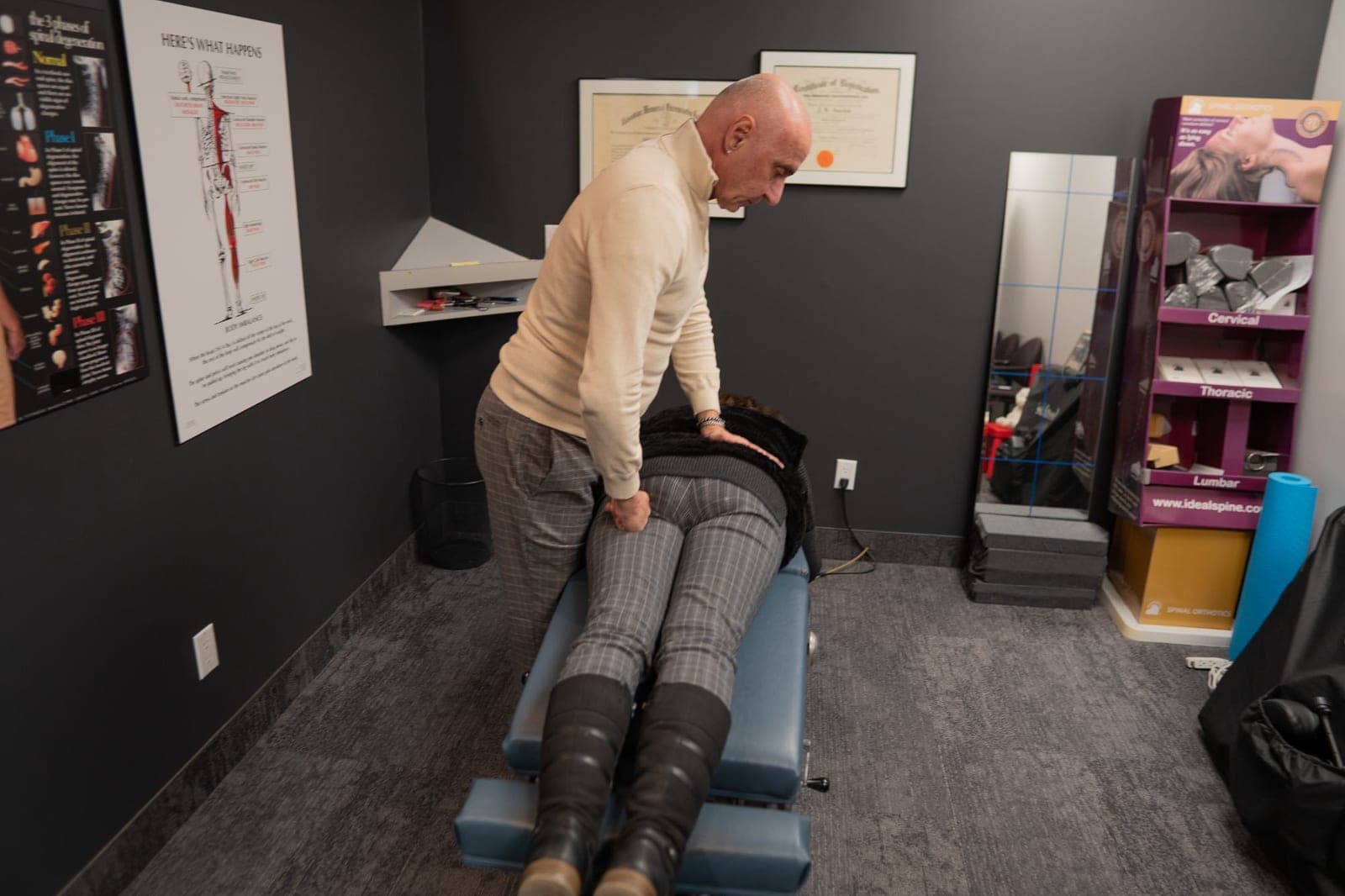
How Our Burlington Chiropractors Approach Hip Pain
The hip doesn't work on its own. It sits between the lower back and the knee, and the way the pelvis and spine move can change how much load the hip takes with every step. That's why our chiropractors in Burlington look at your posture, the alignment of your spine and pelvis, and the way you walk, not only the spot that hurts.
Care is built around what the assessment shows. It may include chiropractic adjustments to the lower back and pelvis, posture exercises, and exercises you can do at home to support how the hip moves. If something points to a problem that needs different care, such as imaging or a visit to your doctor, we'll tell you.
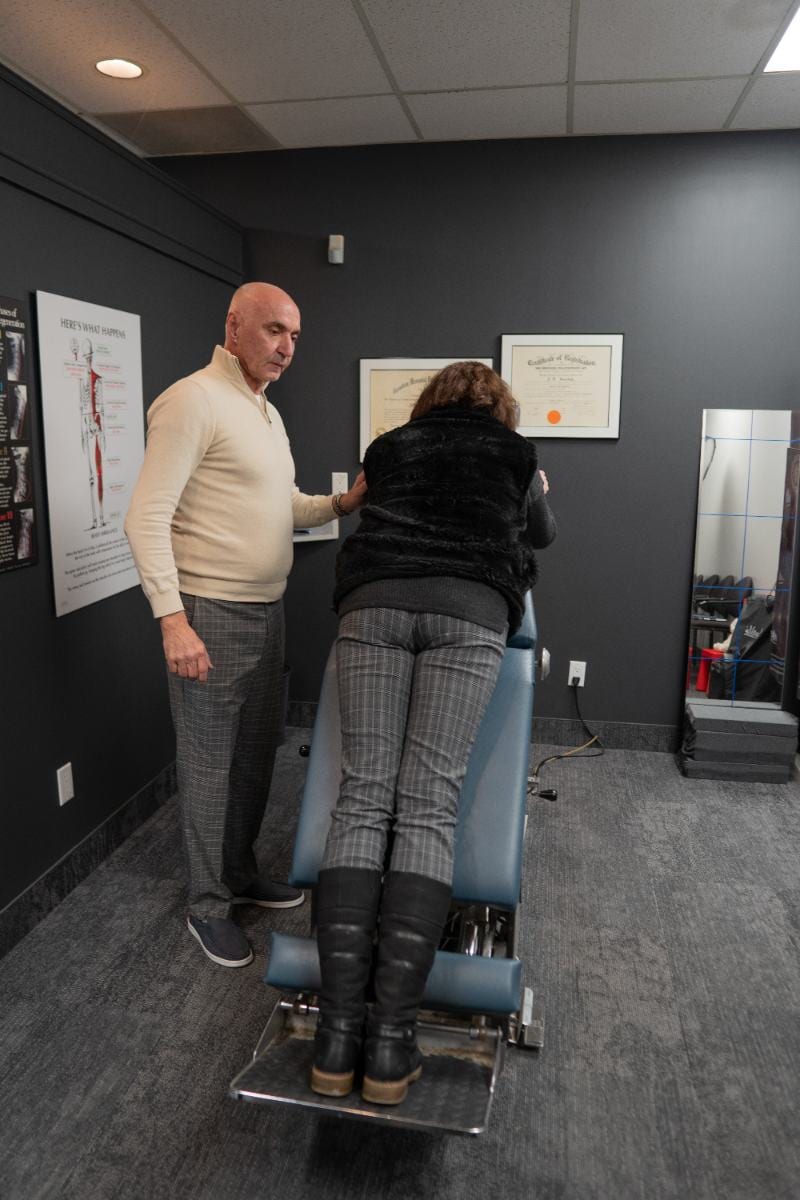
What Can Cause Hip Pain
Hip pain usually builds from a few things working together. Some of the factors we see often:
- Long hours of sitting, which can leave the muscles at the front of the hip tight and the ones at the back underused
- Changes in posture or pelvic position that shift more load onto one side
- Wear in the hip joint that can come with age, often called hip osteoarthritis
- Irritation of the tendons or the bursa on the outside of the hip, sometimes called hip bursitis
- Running, hockey, golf and other sports that load the hip in the same direction again and again
- Pain that starts in the lower back or the sacroiliac joint and is felt in the hip
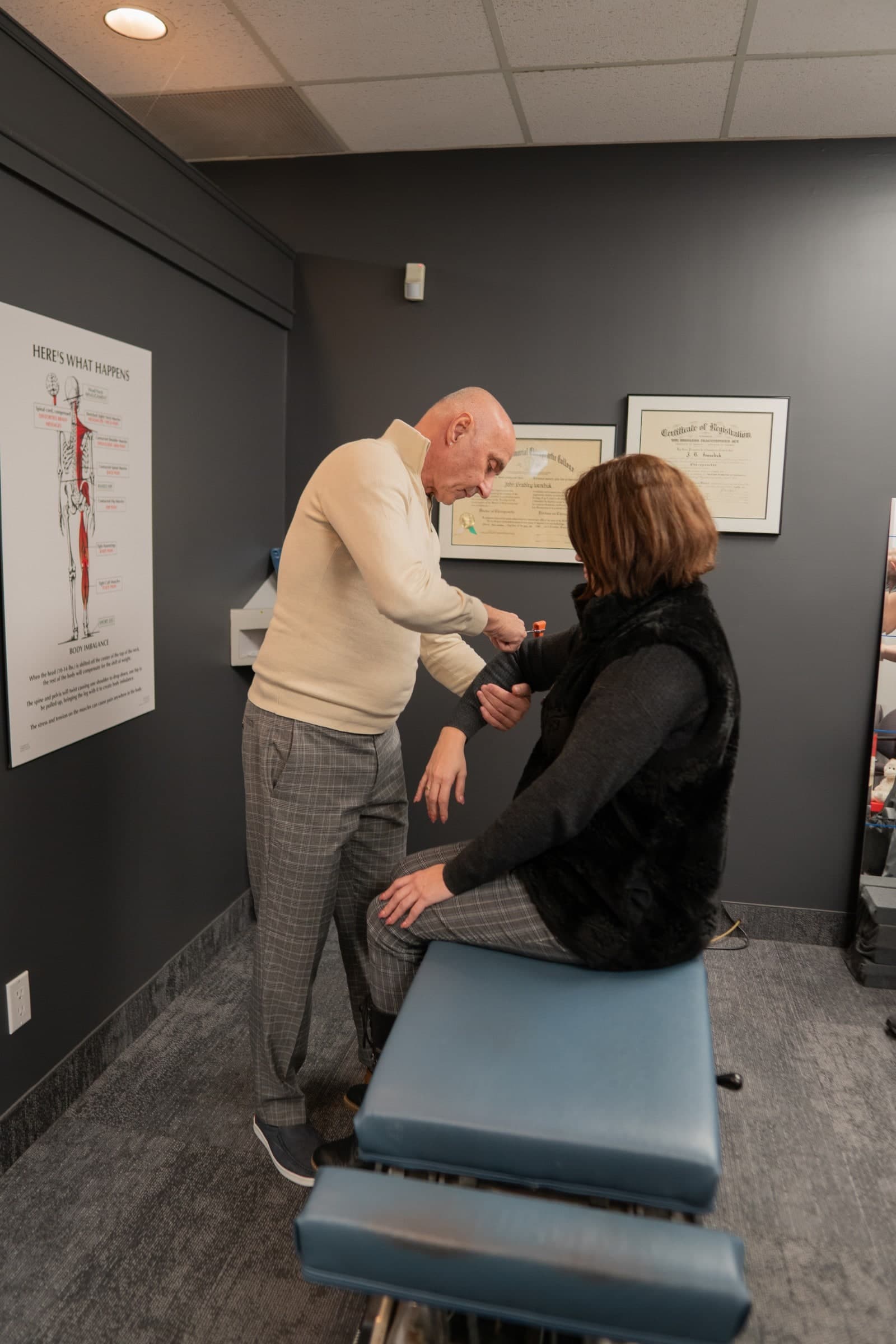
How We Assess Hip Pain
Your first visit starts with your history: when the pain began, where you feel it, what makes it better or worse and how it affects your day. Old injuries matter too, even ones from years ago.
From there we look at how you stand and walk, check the movement of your hips, pelvis and lower back, and test the strength of the muscles that support them. Nothing in the assessment is invasive. If X-rays would help us plan your care, we'll arrange them at a nearby imaging clinic.
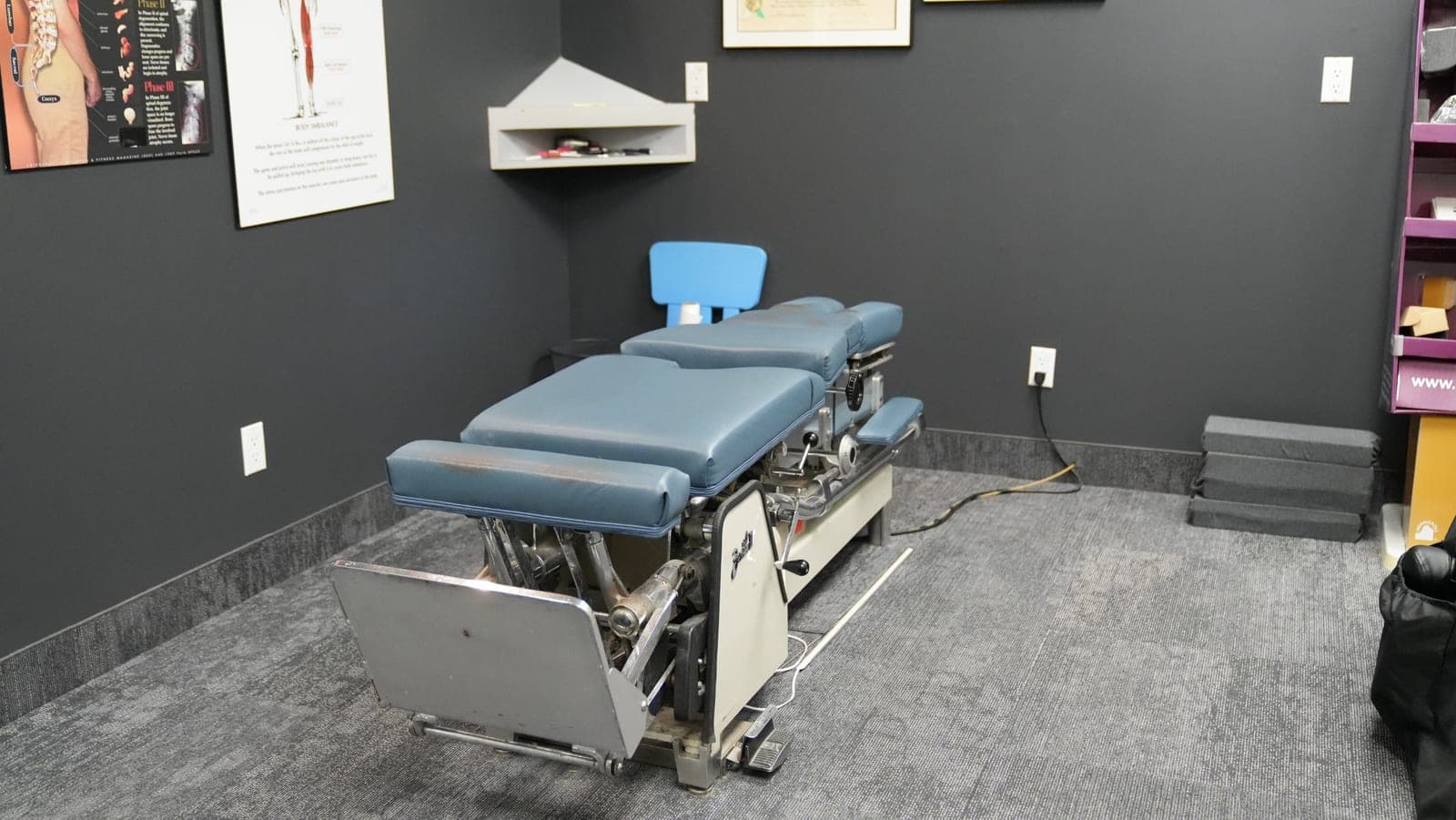
What Hip Pain Treatment Looks Like
Everyone responds differently, so your plan is shaped around your assessment and adjusted as you go. Hip pain linked to muscle and joint strain often settles over 4 to 8 weeks of care, but some people are faster and some take longer.
Along the way we check how you're moving and update the plan. Home exercises and small changes to how you sit, sleep and stand are part of it, because they help the work in the clinic carry over into your day.
Common Questions About Hip Pain
Should I see a chiropractor for hip pain?
Can hip pain come from my lower back?
Do I need a referral to see a chiropractor in Burlington?
Is chiropractic care for hip pain covered by insurance?
What should I wear to my appointment?
Wondering If We Can Help with Hip Pain? Get in Touch
Hip pain often ties back to how the lower back and pelvis move, which is one of the first things we look at.