Care for Lower Back Pain in Burlington
When your lower back hurts, simple things, putting on socks, driving, lifting your kids, get hard. We start by understanding what may be behind it.
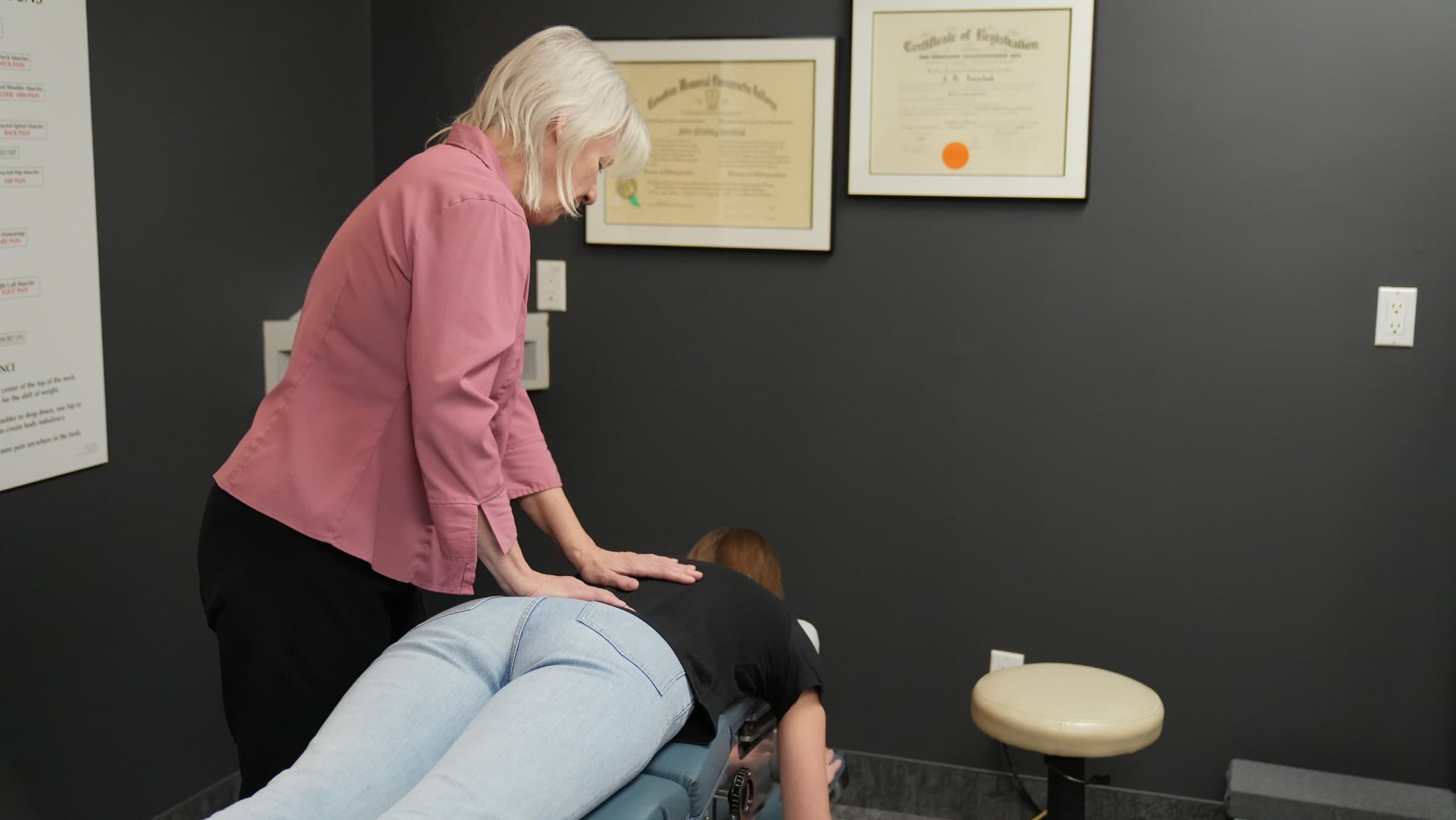
What Causes Lower Back Pain?
Lower back pain is common, and it can show up as a dull ache, stiffness, or sharp spasms that limit how you move. It can come from a single moment or build slowly through everyday habits like prolonged sitting, standing, or repetitive work.
Because the causes vary, an assessment helps us understand what may be contributing for you rather than guessing.
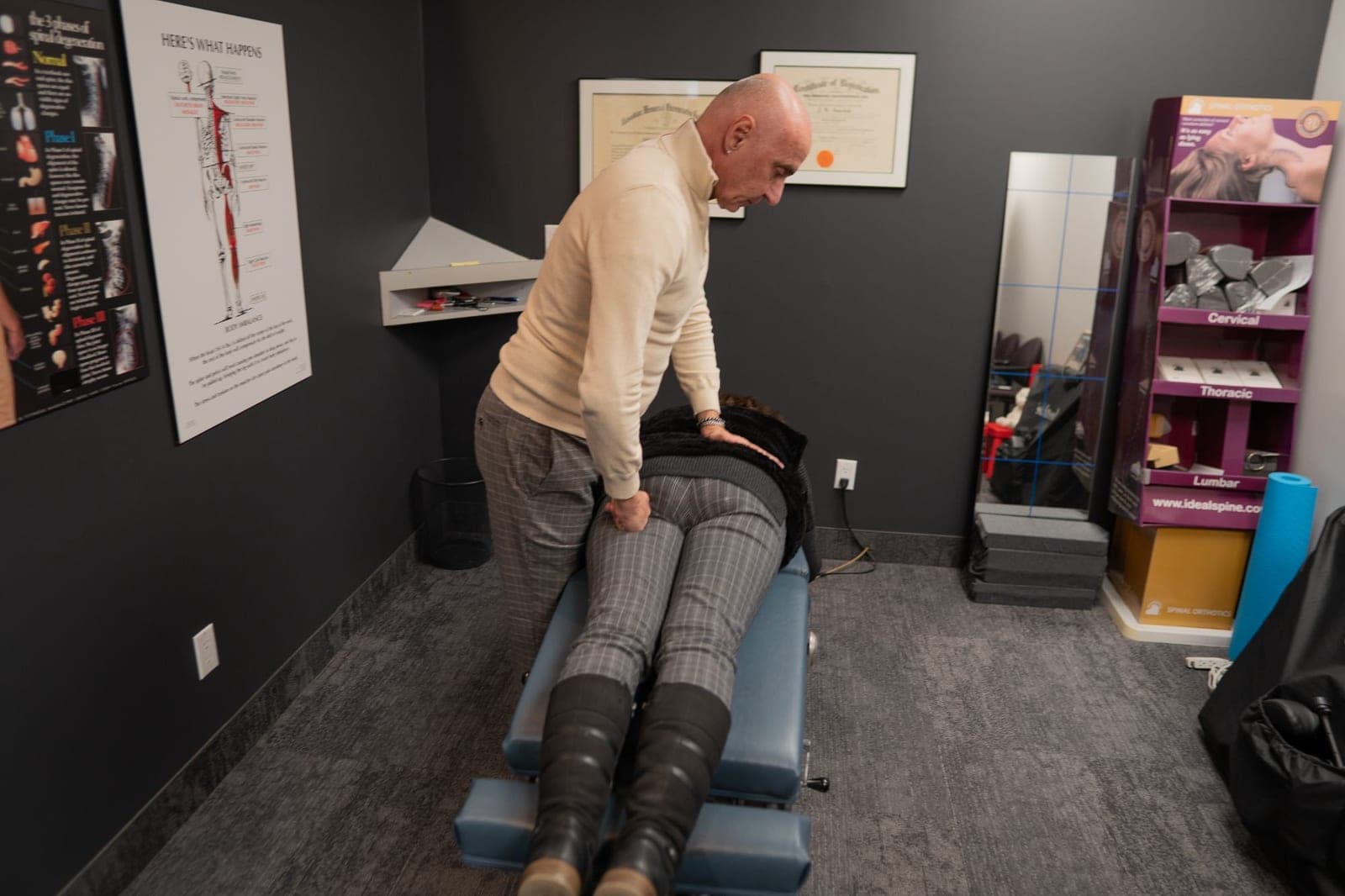
Our Approach to Lower Back Pain Relief in Burlington
Our focus is the spine and posture, and how they may relate to the discomfort you are feeling. After a thorough assessment, we build a care plan around what we find, combining posture-aware care with movement.
The aim is to help you feel and move more comfortably over time, with a plan that fits your situation.
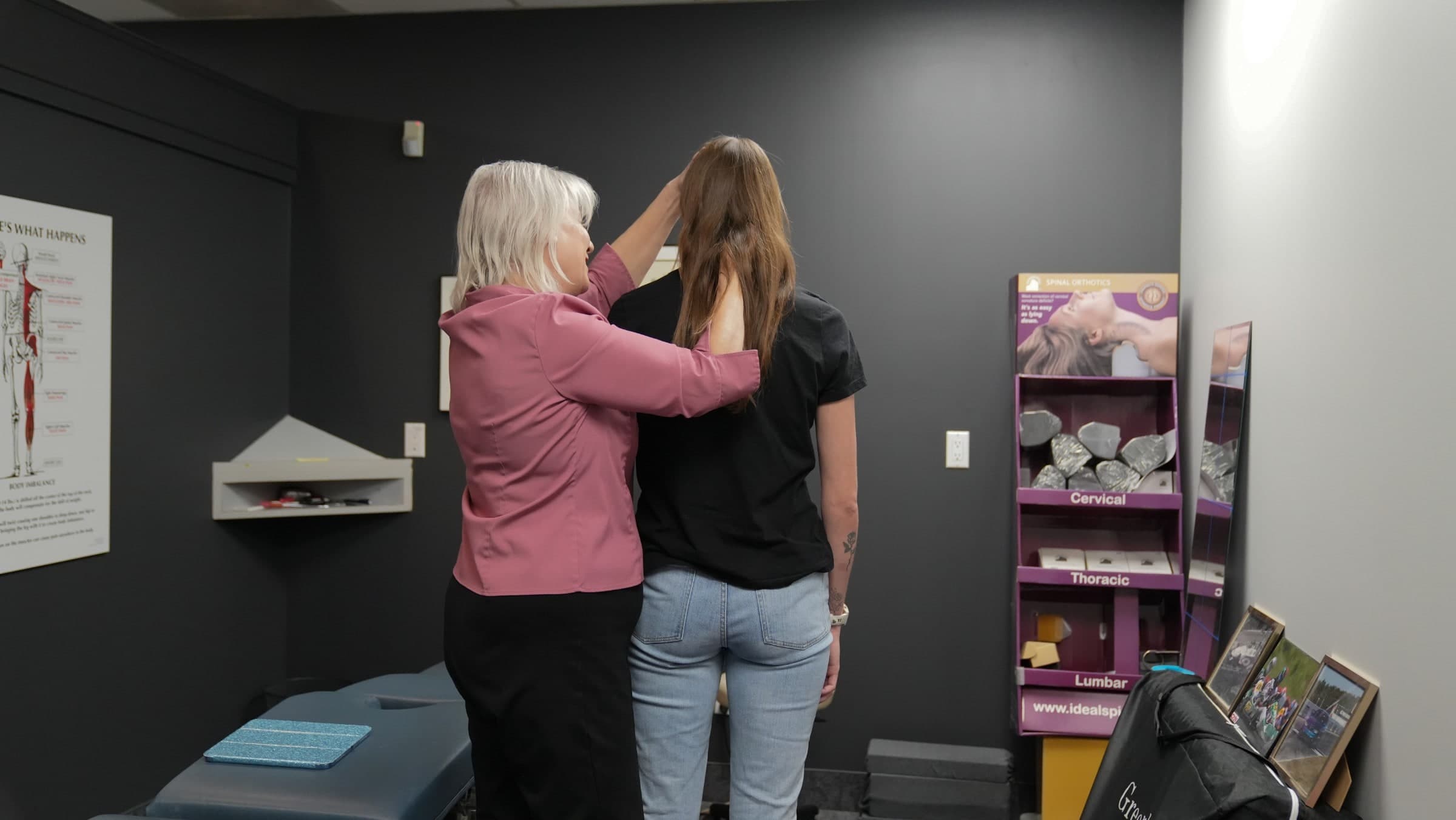
Common Causes of Lower Back Pain
Lower back pain often has more than one contributor, and the same ache can come from different places in different people. Common patterns we see may include strain from lifting or twisting, irritation around a disc or joint, tight or deconditioned muscles, and the load that builds from long hours of sitting or standing. Posture and daily movement habits can add to that load over time. We look at all of it together rather than pinning your pain on one thing too early.
Contributing factors people often mention:
- Prolonged sitting at a desk or in the car
- Heavy or repetitive lifting at work
- A recent change in activity, such as a new workout or yard work
- Long periods on your feet
- Stress or poor sleep that can make muscles feel tighter
No single one of these always leads to pain, and finding which ones apply to you is part of the assessment.
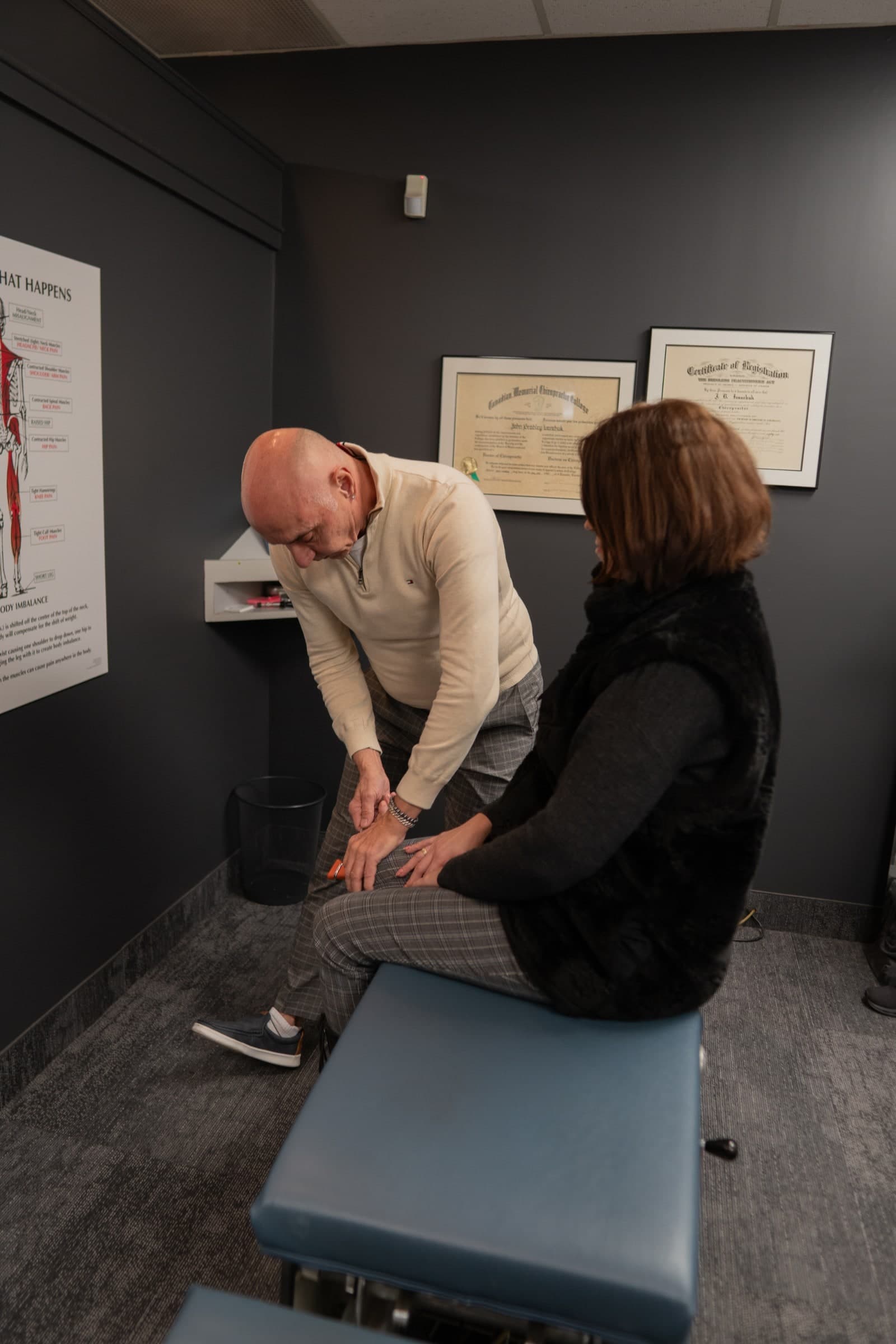
How We Assess Lower Back Pain
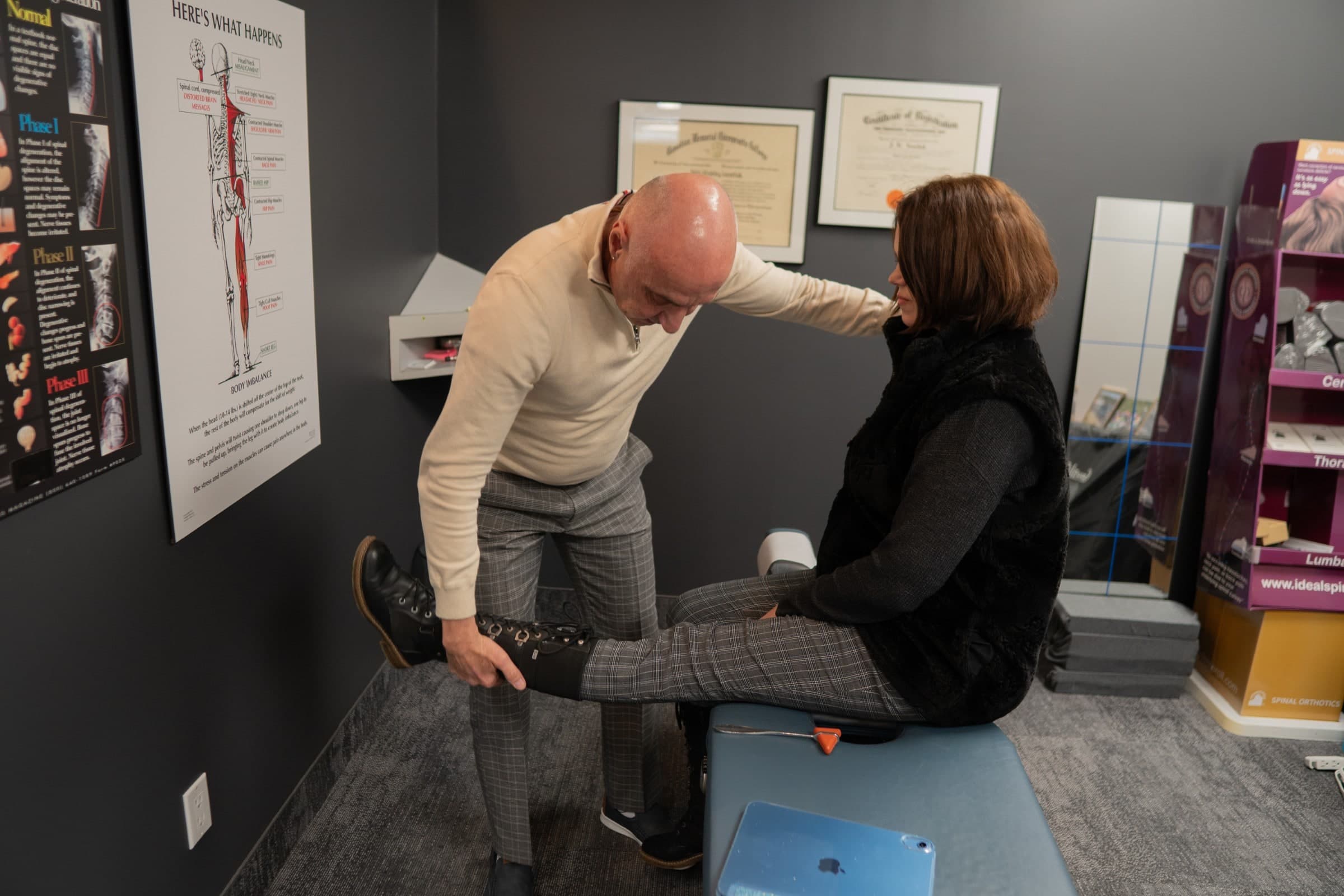
We start by listening. We ask when your lower back pain began, what tends to ease it or stir it up, and how it affects your day, from sleep to work to the activities you want to get back to. From there we move into a hands-on assessment, checking how your lower back and hips move, how the surrounding muscles respond, and whether certain positions change what you feel. We also look at your posture and the way you stand, sit, and bend, since those patterns can relate to the local joints and muscles.
The goal is to understand what may be contributing for you, not to label you with a diagnosis on day one. If anything we find points to a concern outside our scope, we will tell you and help you find the right care. When chiropractic looks like a reasonable fit, we explain what we found in plain terms and talk through options before anything begins.
What Lower Back Pain Treatment Looks Like
Every lower back is different, so your plan is built around your assessment rather than a fixed routine. Some people notice a change in comfort or movement sooner, while others find it takes more time, and we will not promise a specific result or timeline. What we can offer is a clear starting point, care that fits what we found, and regular check-ins to see how your lower back is responding.
As we go, we reassess and adjust. If something is not improving the way we would expect, that tells us to rethink the approach or look more closely. And if chiropractic care turns out not to be the right fit for your situation, we will say so and point you toward another option that may suit you better. Our aim is to help you feel and move more comfortably and get back to the things that matter to you.
Common Questions About Lower Back Pain
Should I rest or stay active with lower back pain?
Do I need imaging before I come in?
Do I need a referral or X-rays before booking?
Can chiropractic care help my lower back pain?
Is it safe to keep working out with lower back pain?
What can I do at home to ease lower back pain?
Wondering If We Can Help with Lower Back Pain? Get in Touch.
Lower back pain has many possible causes, so the assessment matters more than the guess.