

Chiropractic
A natural health care profession focused on the relationship between the spine and the central nerve system with the goal of maintaining proper spinal alignment (posture) supporting the body's natural ability to function and heal.
Nerve System
The brain, spinal cord and spinal nerve roots which control every single function of your body. Two parts: sympathetic (fight, fright, flight) and parasympathetic (rest, digest, repair). These need to work harmoniously; too many people are in constant sympathetic overload.
Subluxation
A partial or incomplete dislocation of a spinal vertebra (caused by stress) which will impair the movement of a spinal joint, distort posture and compress the associated nerve root. Three types of stress; physical, mental/emotional and chemical.
Adjustment
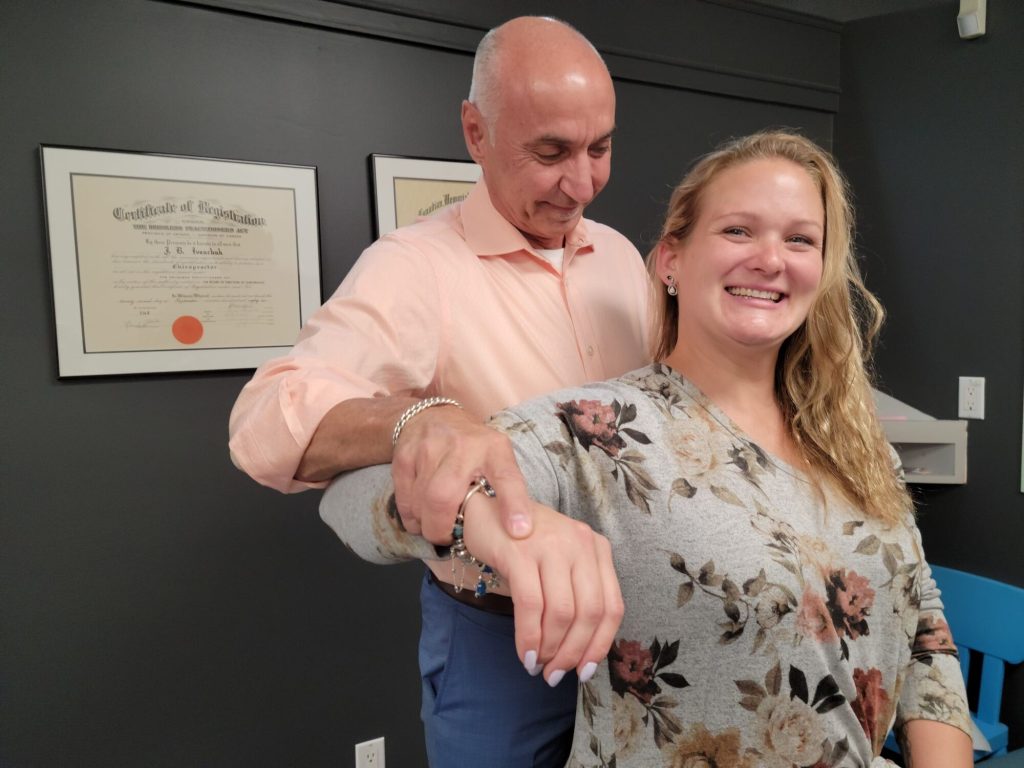
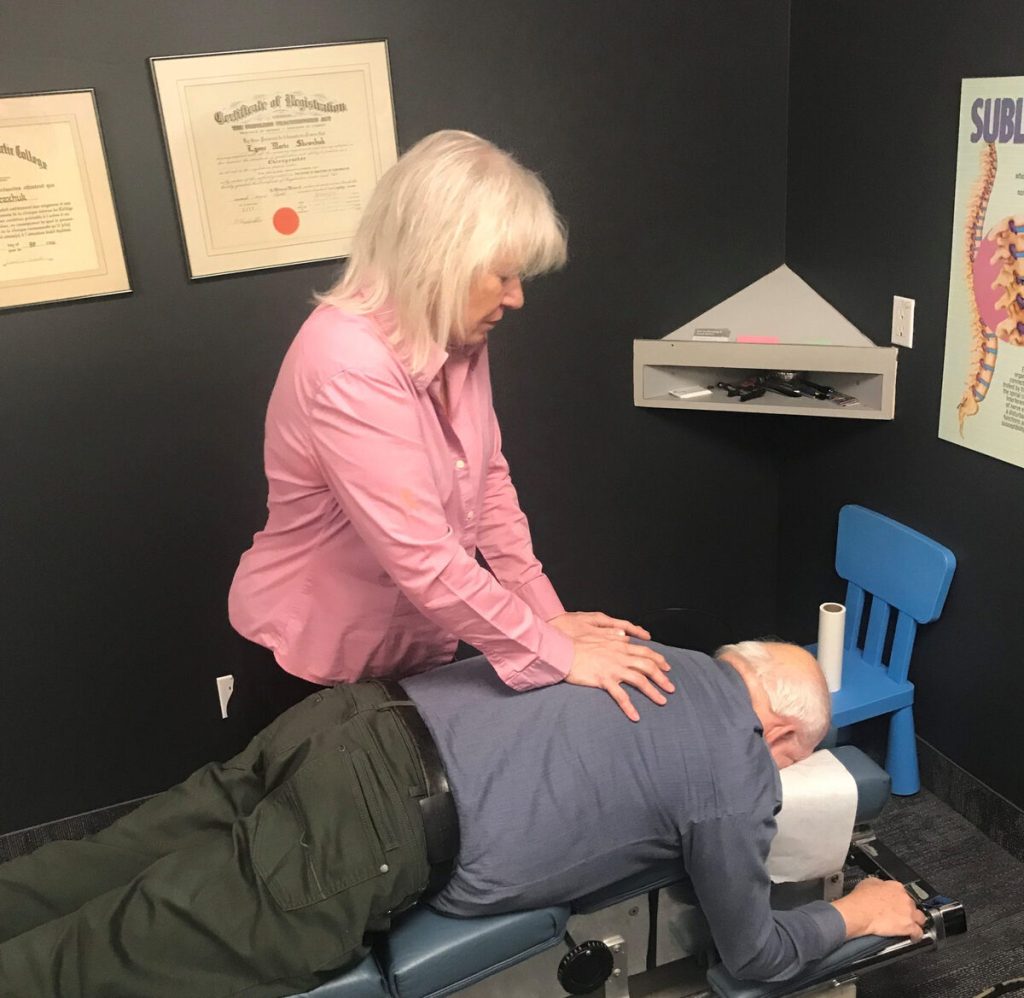
This is what chiropractors are specifically trained to do. An adjustment is a precise and gentle force applied to a spinal vertebra (or an extremity) usually by hand (or sometimes by a hand-held instrument) to restore proper alignment/posture/spinal movement to facilitate nerve system function for healing and overall health. Adjustments are tailored to help people of all ages taking into consideration any co-existing health conditions that may be present.
Spine
The major components of the spine are the occiput (skull), cervical area (neck- 7 vertebrae), thoracic area (middle part where your 12 ribs attach), lumbar area (lower back- 5 vertebrae), pelvis (sacrum, sit bones and coccyx).
Extremity
Upper extremity; arms (shoulders, elbows, hands, wrists, fingers). Lower extremity; legs (hips, knees, ankles, toes). The nerves from the neck (cervical) control the arms. The nerves from the lower back (lumbar) control the legs.
Posture
Posture is the alignment of the body while it sits, stands and moves. It is more than just appearance. Posture influences your spinal health, breathing, energy, confidence and long-term well-being. Good postural hygiene is marked by the following; a straight spine when looking at the back, and when looking from the side; a gentle frontwards curve in the neck & lower back, and a gentle backwards curve in the middle back (thoracic).
Posture Distortions
These are the result of long-standing subluxations; those that are left undetected and uncorrected. Scoliosis (C-curve or S-curve of the spine), tech neck (forward head posture) when the head and neck reach out in front of the shoulders, alordosis (loss of normal frontwards curve in the neck; straight neck), thoracic hyper-kyphosis ( hump back, slouchy posture, often accompanies tech neck).
Spinal Disc
The cartilage spacer found between the vertebrae. When healthy, these cushions are thick and plump which allows adequate space for the nerve root as it branches off of the spinal cord and exits the spine. The nerve root then branches into many individual nerves which travel to all parts of your body.
Degenerative Disc Disease
This is when the spinal discs become weak, brittle and thin. This is the result of spinal subluxations/posture distortions that been left undetected and uncorrected. As the disc collapses, a few things can happen; spinal nerve root compression, spinal joint irritation (the little joints between each pair of vertebrae-highly sensitive), spinal joint arthritis (the spinal joints and vertebrae can start to fuse together).
Sciatica
Pain, cramping, muscle tension, numbness and/or tingling that travels down into the leg/foot that stems from nerve pressure in the lower back. This can happen with or without back pain.
Thompson Technique
This is a method of adjusting that utilizes a drop table. This means that the cushions on the table drop one half inch under the weight of your body as the adjustment is being delivered. It is a very comfortable, low-force technique which is most excellent for lower back and pelvic alignment correction, as well as cervical spine (neck curve) correction. This is our go-to technique here at Life Chiropractic Centre. Both chiropractors here have studied with Dr Clay Thompson himself who developed this technique in 1957.
Activator Methods
This is another low-force adjusting technique that uses a hand-held instrument called an Activator. We also use this technique for people who prefer this method and special cases.
Upper Cervical Specific
This is another low force, hands-on adjusting technique that focuses primarily on correcting alignment of the top 3 vertebrae in the neck; C1, C2 and sometimes C3. We do practice this technique as well for those who prefer the purest chiropractic adjustment. Adjustments here focus on relieving any tension and torque on the brainstem which controls all vital functions within the body.
Innate Intelligence
You will hear some chiropractors use this terminology, especially those who practice pure chiropractic. Innate intelligence is the built-in wisdom inside your body (everyone's body) that controls adaptation, self-regulation, homeostasis and normal function. Innate intelligence is best expressed within your body when your upper cervical spine (especially) is in good alignment and there is minimal torque and tension on the brainstem.
Detailed Posture Scan
This is a complimentary service we offer here at Life Chiropractic Centre for the members of our community. It's a quick and easy hands-off scan designed to measure several different postural parameters which will identify and locate your major subluxations and posture distortions. It is an excellent tool for making sense of your current health issues and possible future health issues. You will be able to see for yourself right then and there. We also recommend scanning your whole family because spinal problems do tend to run in family's.
What is NOT Chiropractic
Even though some chiropractors choose to incorporate these into their practice, they are not chiropractic and do not replace the chiropractic adjustment. These include massage, acupuncture, fascia release techniques, ART (active release technique), vibration plates, heat therapy, ice therapy, ultrasound, cupping, TENS, shockwave therapy, laser therapy and any kind of electrical therapy (most of these are modalities common the the practice of physiotherapy). Physiotherapy is a practice unto itself as is osteopathy.
It is important to understand these because you need to know the exact nature of the treatment you are consenting to; the risks and benefits.
Conclusion
Another thing to be clear about is chiropractors DO NOT crack your back or neck. When you crack something, it breaks! That's not the intention of any chiropractor. With some adjusting techniques, you may hear a popping sound which is either gas being released from a spinal joint (similar to the opening of a pop bottle) or adhesions (little pockets of scar tissue) releasing in the surrounding soft-tissues (muscles, tendons). None of these are detrimental.
Remember that we are always here to help and educate you about chiropractic. You can reach out to us by email; info@lifechiropracticcentre.ca or calling us at 905-335-LIFE (5433).
We'd be honored to have you join our chiropractic family.
Have a Question About Your Care?
Our team is happy to help. Reach out and we’ll get back to you.
Get in touch