
Dr. Brad Ivanchuk here, a Burlington chiropractor at Life Chiropractic Centre on Guelph Line. September means new shoes, new teachers, and a backpack that gets heavier every week. Most parents never think about that pack until their child starts complaining of a sore neck or shoulders, and by then the strain has usually been building for a while.
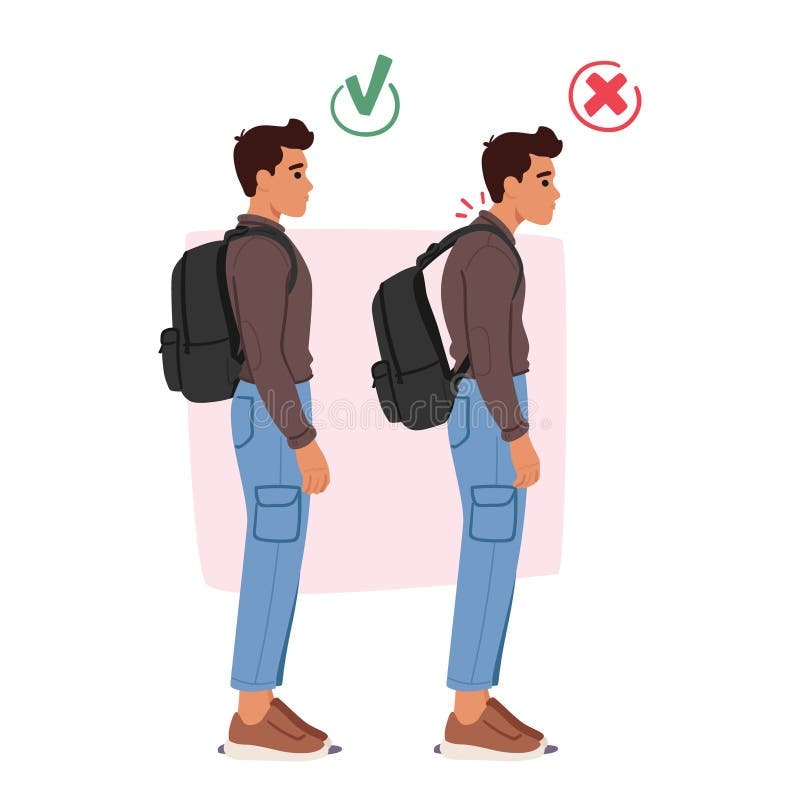
Multiple research studies show that kids who carry backpacks that are too heavy are more likely to have pain in the postural system, which is made up of the skeletal and muscular systems. Children whose packs are too heavy often present with forward head posture, which is closely linked to neck pain, and can bring shoulder pain and headaches with it. To put the load in perspective, the U.S. Consumer Product Safety Commission calculated that carrying a 12-pound backpack to and from school every day for a full school year puts a cumulative load of about 21,600 pounds on a child's spine, roughly the weight of six mid-sized cars.
So backpack safety isn't something to take lightly. Here's how to keep the pack from working against your child's posture.
How Heavy Is Too Heavy
A loaded backpack should never exceed 10 to 15 percent of your child's body weight. If your child weighs 120 pounds, the pack shouldn't top about 12 to 18 pounds. Weigh it on a bathroom scale one morning before school and you may be surprised.
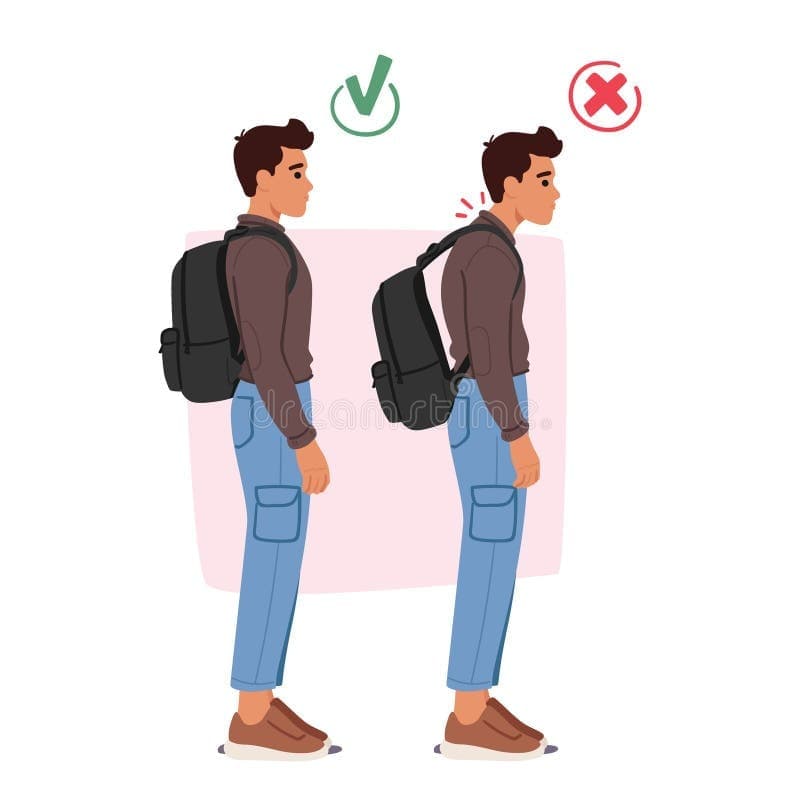
When a pack is too heavy, kids lean forward to counter the load behind them. That forward lean is the same pattern behind forward head posture, and in a growing child it can set in fast.
How to Wear It
There are two straps for a reason. Slinging a pack over one shoulder throws the spine sideways to compensate and can encourage a lateral curve. It's one of the most common habits we see in students.
- Use both shoulder straps, snugged so the pack sits close to the back, not sagging down by the hips.
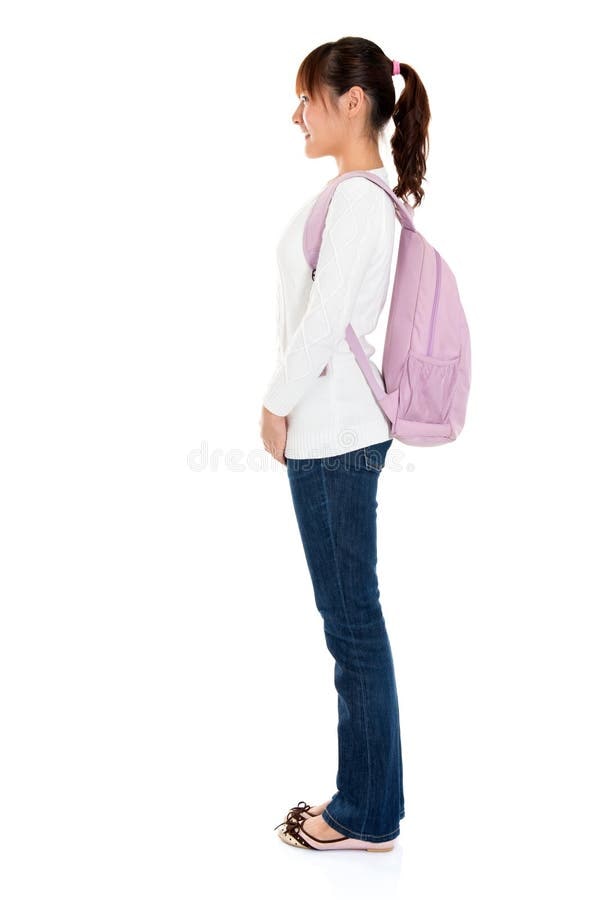
- The pack should rest in the middle of the back with weight spread evenly over both shoulders.
- If it has a waist or chest strap, secure it in front. That shifts load off the shoulders and onto the stronger core.
- Choose wide, padded straps over thin ones that dig in.
How to Pack It
Load the heaviest items first, like laptops and textbooks, so they lie closest to your child's spine. Lighter things go toward the front. Use the compartments so the load doesn't shift and pull to one side. And clear the pack out weekly, since it collects weight nobody remembers adding.
Warning Signs to Watch For
Kids rarely say "my posture is off." They say their bag is annoying, or they stop mentioning it. Watch for these instead:
- Struggling to get the pack on or off
- Leaning forward to carry it
- Red marks or grooves on the shoulders
- Complaints of numbness or tingling in the arms
- Sore neck, shoulders, or back after school
Some of these overlap with the patterns we cover in posture and spinal health, and catching them early in a child is far easier than correcting a habit that's had years to set.
When to Have Them Checked
If your child carries a load close to their limit every day, or you're already seeing some of the signs above, it's worth a look. We assess how your child stands and moves, not where it hurts. Consultations and posture checks are always complimentary, so if you have any questions you can book an appointment and we'll go from there. Our number in Burlington is 905 335 LIFE (5433).
Remember that good posture is always by design and never by circumstance. A good backpack habit set in September saves a lot of sore shoulders by June.
Have a Question About Your Care?
Our team is happy to help. Reach out and we’ll get back to you.
Get in touch
