

The most common posture distortion affecting the global population currently is Tech Neck (also known as Forward Head Posture). This isn't just a cosmetic problem. It's not just a 'pain' problem. There are serious neurological implications associated with Tech Neck. Let's dive in.
Extra Head Weight
Look at the image above. This represents the most common degree of forward head posture which is 60 degrees. This is classified as extreme forward head posture and adds an extra 60 pounds of weight onto your neck and upper back. This is equivalent to carrying the average 7 year old child on your shoulders all the day long. Mild forward head posture of 15 degrees adds about 27 pounds, 30 degrees is moderate which adds about 40 pounds, 45 degrees is severe which adds about 50 pounds. 60 degrees is extreme.
Understanding Tech Neck and Neurology
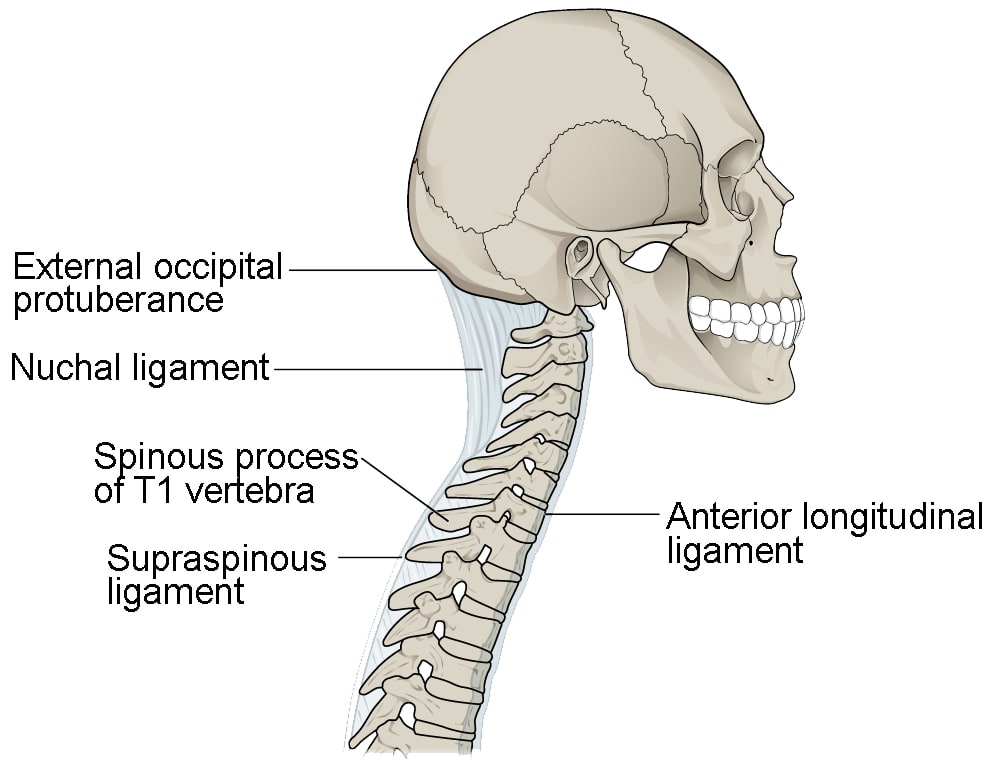
This schematic shows what a Tech Neck would look like on xray. The jaw is protruding forwards, the neck is straight or beginning to curve backwards. There should always be a forward curve in the neck and the skull is aligned perfectly on top of the neck. There are many tiny muscles attached to the external occipital protuberance. This is where neurological problems stem from. These little muscles would be stretched to the point of extreme tension. The receptors in these tiny little muscles would then be impaired thus distorting the information they are to input to various parts of the brain.
Garbage In, Garbage Out!
When the input to the brain is distorted, here is what can happen:
- Impaired sensory-motor integration (distortion of connection between brain & body)
- Impaired balance and coordination
- Loss of gaze stability
- Loss of awareness of where your body is in space
- Impaired awareness of upper limb position
- Diminished performance
- Higher frequency of injury
- Elevated sympathetic tone (constantly in fight or flight mode, and you don't heal in this state)
- Elevated cortisol (weight gain, fatigue, weakness, irritability, poor concentration, high blood pressure, headaches)
- Diminished blood flow to the brain due to increased tension of the vascular tissues in the neck (brain fog)
What can you do?
Chiropractic care to correct Tech Neck has proven to be the most effective treatment according to several studies. Reducing forward head posture (Tech Neck):
- Improves appearance
- Reduces neck, shoulder, arm pain
- Improves communication between brain and body (restores clarity of signals)
- Restores balance and coordination
- Improves awareness of where your body is in space
- Calms sympathetic overload
- Improves performance
- Reduces likelihood of injury
- Improves sensory-motor integration
- Removes interference in one of the most neurologically dense areas of your spine (those tiny little muscles underneath your external occipital protuberance)
What Causes Tech Neck
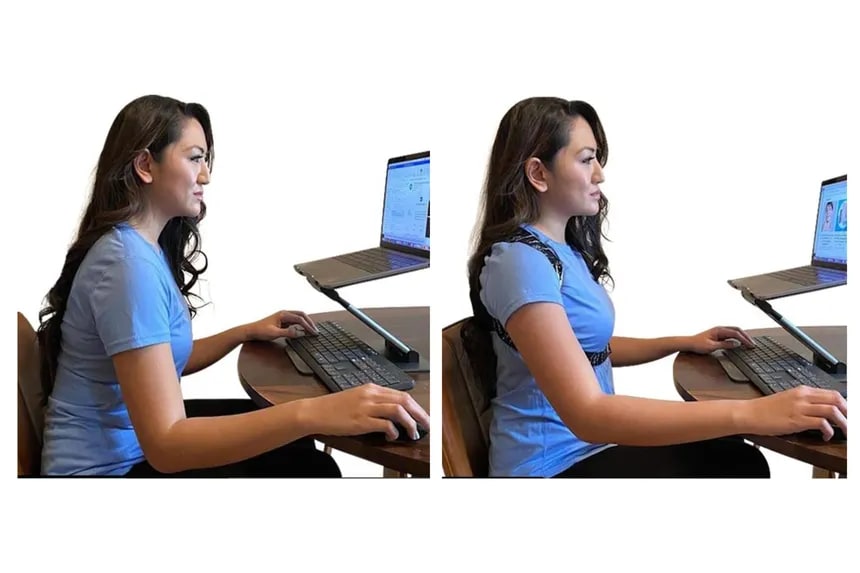
Falls, sports injuries and whiplash-type car accidents can all push the head forward. The 2 biggest causes, though, are the ones you don't notice while they happen: looking down at a phone and sitting at a computer. Hours of daily screen time, plus texting on top, add up quickly, and kids start young.
Try This Breathing Test
Stand tall, with your head back, shoulders back and chin up, and take a big, deep breath. Now slouch partway and take another. Then slouch fully and try once more. Notice how much less your rib cage moves each time. A slumped posture restricts your rib cage, so each breath is shallower. That's one reason you can feel sluggish, foggy and start yawning after a few hours at the computer. Your postural muscles tire too, and you slump even further. Eyes up and chin up whenever you're on a screen can help.
Sore Spots at the Top of Your Shoulder Blade
After a long stretch at the computer, you may notice tender spots at the upper inner corner of your shoulder blade. A muscle connects the base of your skull to that point, and its job is to help lift your shoulder. With tech neck, that muscle is stretched over and over, and the place where it attaches can get sore. For some people the spots feel hard or even burn. A few things can help:
- Be mindful of your posture whenever you're at the computer or on your phone.
- Take a posture break at least once an hour.
- Put a soft gel ice pack on the tender spots for 10 minutes, 2 or 3 times a day.
Healthier Phone Habits for the Whole Family
Keep your chin up so your eyes look straight ahead at the phone instead of down. When your arms get tired, put the phone down and rest them for a minute rather than dropping your head. Avoid walking and texting too: kids who do it lose their natural arm swing, shuffle and slump forward.
To check your child, have them stand relaxed in bare feet and look at them from the side. The opening of the ear should sit directly over the middle of the shoulder. If it sits in front, that's tech neck, and it's worth having their posture checked. Left alone, it often leads to a rounded hump back. Habits built early make a big difference to kids' posture, since their posture system is still developing.
Conclusion
We all must realize that we'll be interacting with various forms of technology for the rest of our lives. Technology will never go away thus we'll always be at risk of developing Tech Neck. Children are on tablets as early as 2 years of age; way before their posture system has fully matured. Chiropractic care can go a long way towards preventing Tech Neck and many other posture distortions. To find out more on how we can help with Tech Neck, book an appointment at our Burlington clinic and we'll take a look at your posture together.
Want the Full Posture Guide?
We put together a free posture guide you can download and keep.
Get the free guide

