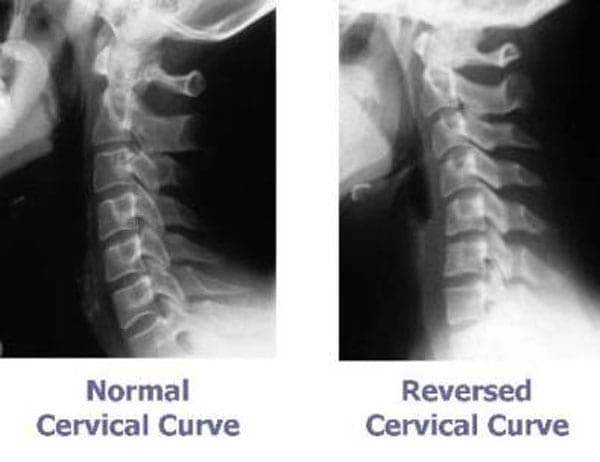

I want to talk about reversed cervical curves and why they are worth paying attention to if you have one.
What a Healthy Neck Curve Looks Like
Your neck is meant to have a gentle forward curve, usually somewhere around 42 degrees. A reversed cervical curve means the neck is either straight or curved the other way, backwards, when it should be curving toward the front.
You can see what I mean if you look at the x-ray image on our home page. Once you know what a healthy curve looks like, the difference is easy to spot.
Why the Curve Matters
When the neck loses its natural curve, the soft tissues, joints, and structures in that area sit under more strain than they were designed for. Think of how an elastic band thins out the more you stretch it. A neck that is held straight or backwards carries that kind of ongoing tension.
Over time, that added strain in the neck is a common source of stiffness, muscle tension, and discomfort. It is a musculoskeletal issue, and it is one of the things I look at closely during an assessment.
How I Approach It
Chiropractic care is intended to support the muscles, joints, and posture of the neck and spine. When I assess a reversed cervical curve, my goal is to help reduce the strain on those structures and support better movement and posture over time.
Many patients with neck and posture concerns find that a tailored plan helps them feel and move better. Every neck is different, so the approach depends on what I find during your assessment.
Questions About Your Neck
Next time, I will go into how a neck ends up straight or curved backwards in the first place. In the meantime, if you have questions about your neck curve, your posture, or any other concern, you can send us an email or give us a call at 905 335 5433. I am always happy to talk it through.
Family appointments are available too, since posture and spinal habits often show up across a family. Looking at them sooner usually makes for an easier path forward.
Life Chiropractic Centre has been helping families in Burlington for over 25 years.
Have a Question About Your Care?
Our team is happy to help. Reach out and we’ll get back to you.
Get in touch