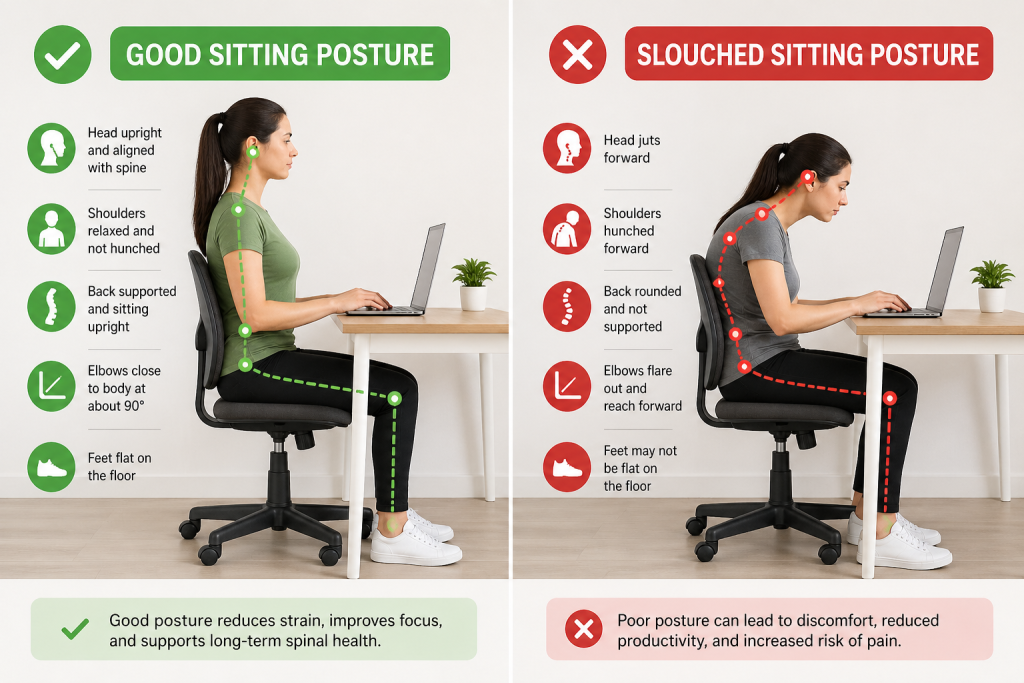
In today’s technological age (cell phones, laptops, tablets etc.), slouchy posture or thoracic hyperkyphosis (humpback) has become a pervasive health issue. Far from just an aesthetic concern, this condition is associated with chronic pain, respiratory compromise (decreased lung capacity), functional disabilities and even increased mortality rates amongst our older population.
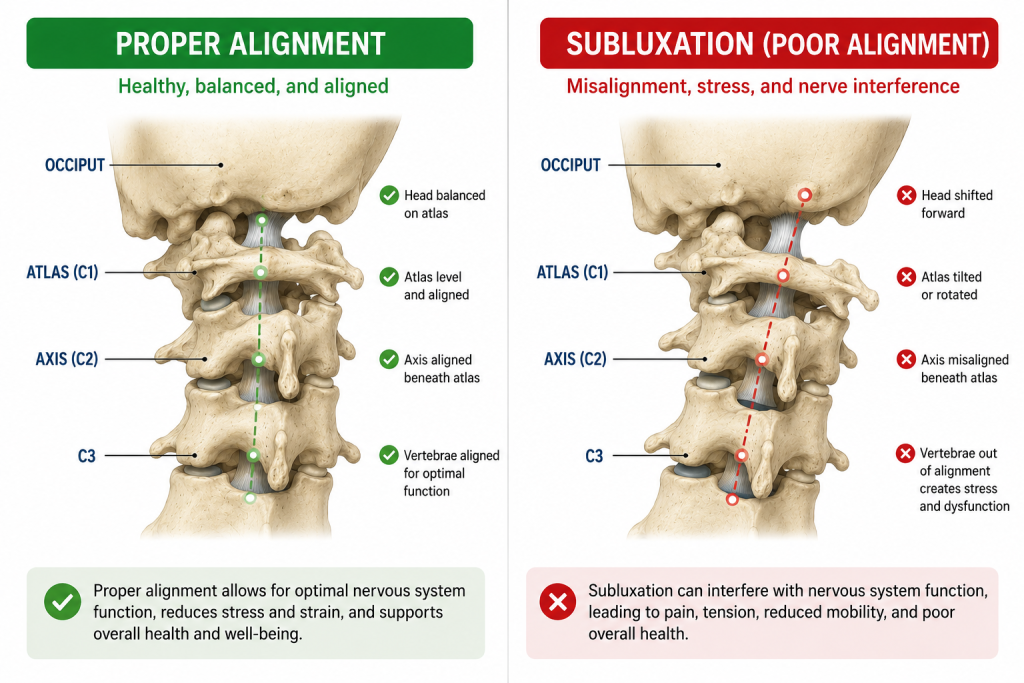
Traditional treatments primarily focus on symptom management through pain medication and/or physio, frequently failing to address the root structural cause which is postural collapse due to posture distortions of the neck and thoracic spine. Posture distortions are the result of vertebral subluxations (misaligned vertebrae) left undetected and uncorrected. Over the course of time as posture collapses, there is a cascading sequence of events; onset of degenerative disc disease, spinal joint irritation and spinal nerve root compression. This causes further postural collapse as the individual is forced to compensate even further and the sequence begins to feed upon itself. Symptomatology begins to intensify and expand.
Curves Exceeding 50 Degrees
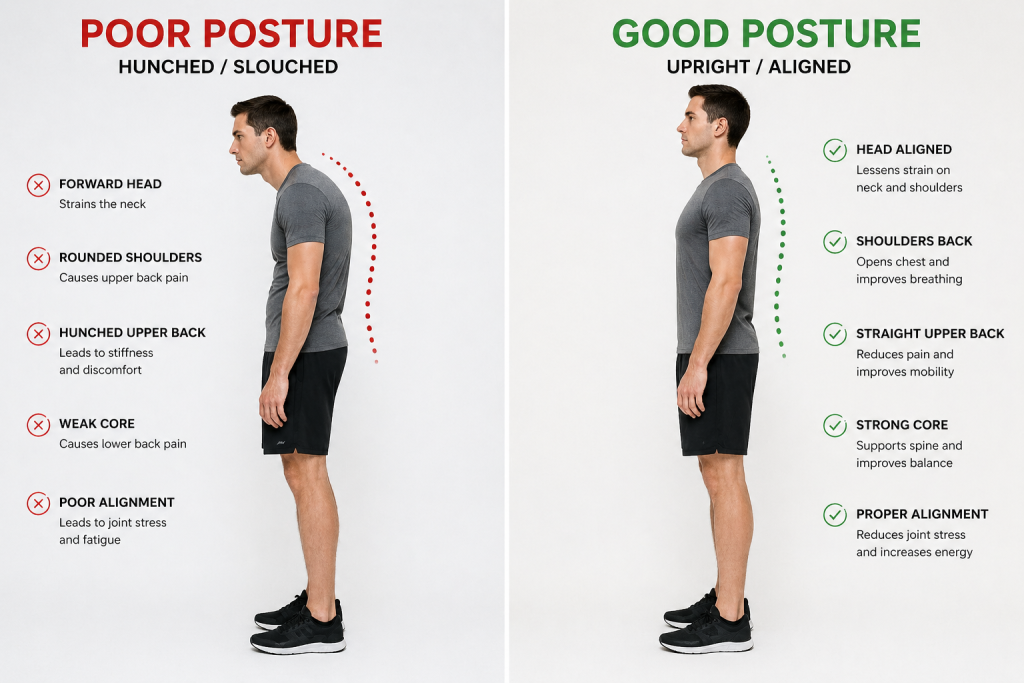
Thoracic hyperkyphosis is characterized by an excessive forward curvature of the upper back (upper thoracic spine). A normal thoracic curve measures approximately 44 degrees but curves in excess of 50 degrees are considered hyperkyphotic (hunched/slouched). This deformity places immense mechanical stress on the spine leading to muscle fatigue, vertebral wedging (compression fractures), and nerve system tension.
Indicators of Slouching Posture
Other than someone alerting you or you yourself notice hunching of your shoulders and upper back, you may experience the following:
headaches
mood swings
shortness of breath (lung capacity can be reduced by up to 30%)
neck stiffness
upper back ache (mid-scapular pain)
lower back ache
rapid pulse rate
elevated blood pressure
vertigo
loss of balance/falls/poor coordination
What can you do?
Even severe long-standing postural issues in adults can be improved with the right treatment plan. Improving the spine’s alignment/posture directly correlates with pain relief and improved organ function. I have seen this with dozens of my practice members over the years who have committed to a prescribed treatment plan to address this issue.
Passive treatment is rarely enough. Specifically applied chiropractic adjustments coupled with spinal traction, reverse/corrective posture exercises and postural fitness education offer a viable, non-invasive alternative for managing postural deformities like thoracic hyperkyphosis. (ref.Chiropractic BioPhysics)
Please understand that most people will be interacting with technology and be in a ‘sit job’ for the rest of their lifetime. Being proactive here will have far-reaching health benefits.
We have been helping people in our community with postural issues for years.
This is a summary of a recent study that I have translated into lay terms for you to understand because it is hugely important for your health and the health of all of your children.
This study examined Forward Head Posture or what I like to call ‘tech neck’ which is defined by the forward posturing of the head in relation to the centre point of the deltoid muscle (shoulder). The opening of your ear should be centred directly over this point.
Growing Epidemic
While previously dismissed as a minor cosmetic nuisance (hump-back), it is a growing epidemic among young adults due to prolonged smartphone and computer use. In fact, the American Posture Institute reports that over 30% of school-aged children are now exhibiting signs and symptoms of tech neck.
Neurological Issues Previously Undocumented
The mechanical stress on the cervical spine (neck) and upper back (thoracic spine) has been well documented (headaches, neck pain and stiffness, TMJ pain, migraines, shortness of breath), but the neurological costs have been largely undocumented until now.
The Brain Struggles to Send Messages
The brain sends signals to all the postural muscles in the body. And when the posture is proper-head and neck aligned vertically over the centre point of the shoulder-the brain sends clear messages to the postural muscles with minimal effort. However, when the system is strained due to Forward Head Posture (tech neck), the brain must shout to be heard. The central nerve system (the fight or flight-sympathetic branch) in people with tech neck is in overdrive!
What are the Consequences?
When your brain is over-recruiting its resources to manage postural distortions such as tech neck (and others such as humping of the upper back and scoliosis), those resources are not available for other important tasks which can lead to:
brain fog (cognitive decline)
physical exhaustion
clumsiness and poor coordination participating in complex sports
chronic pain syndromes
These are the major findings of this study.
Early Intervention is Critical
Most of us and especially our children will be interacting with technology for our entire lifetime. And kids are starting at an early age nowadays well before the postural system has matured. Waiting for these symptoms to develop is waiting too long. By the time symptoms manifest, the brain will likely have been compensating for years.
What Should You Do?
The first thing to do would be to have your posture system evaluated by a chiropractor who has a special interest in posture. This will identify any and all posture distortions as well as any areas where there may be degenerative changes in the spine. These are a consequence of postural distortions left undetected and uncorrected.
A corrective program of chiropractic care (adjustment, spinal traction, corrective posture exercises, learning how to interact with technology in a healthy way) focuses on restoring the normal curve in the neck not only to relieve muscular tension and pain, but also to restore neurological efficiency of the central nerve system.
Well, the answer to this question is both yes and no. Yes, it is normal to have some back stiffness and slight achiness after you do yardwork for the first 2 or 3 times in the springtime for example. Why? Because of the unusual bending, twisting, active postures and the demands on your muscle tissues that support your spine and the many different postures it assumes while doing all the tasks associated with yard maintenance. And these should dissipate quickly after your body has acclimatized to the tasks of gardening/yardwork after a few sessions. But, on the other hand no, some things are not normal and indicate a deeper issue.
These things are not normal:
relentless back pain
cannot sit, stand or lie down comfortably
you shuffle along instead of walking normally
pain and/or burning into either butt cheek or both
pain down in either leg or both (sciatica)
cramping in the hamstrings, calves and feet
burning, tingling, pins and needles in the feet
cannot stand up straight
cannot walk with upright posture
body appears crooked; pelvis is going east and shoulders are going west (this is called antalgia and signifies a spinal disc problem)
What do these things mean?
A few things are indicated here that you need to be aware of and should never be ignored or masked with analgesics.
a pinched nerve in the lower back (subluxations/one or more misaligned vertebrae)
inflamed spinal joint (the joint between the vertebrae) in the lower back
inflamed sacroiliac joint which is part of the pelvis (you have 2, right and left)
subluxation (misalignment) of the sacroiliac joint
a bulging spinal disc (the ever important pads between the vertebrae)
degenerative disc disease in the lower lumbar spine (spinal discs are getting thin and weak)
scoliosis (spinal curvature)
spinal cord stenosis (narrowing of the spinal canal in the very lower back)
degenerative changes of one or both hip joints
Chiropractic care can help you with most of these. But if not, your chiropractor will refer you to the person who can.
What should I do?
In the immediate circumstance, you should stop whatever you are doing, apply an ice pack and rest. NEVER use heat as heat will promote inflammation. There has to be inflammation for you to feel pain so heat is the last thing you want to do. Ice is a natural anti-inflammatory which will not harm your stomach lining, liver or kidneys. Fifteen minutes on every hour until you feel relief. If you have a chiropractor, please check in with them for an assessment to see if you need an alignment (adjustment). If you are in excruciating pain (lower back and/or legs), feel numbness along the inside of both thighs with loss of bladder and/or bowel control, get yourself to emergency asap! Please do not make the assumption that if the symptoms go away because you have loaded yourself with painkillers, the problem has resolved. It has not.
Helpful Hints
I have been recommending these to my practice members for years, and they find them extremely helpful.
Warm up your back before you start your tasks. (see below)
Rotate between 2 or 3 different tasks. Spend 30 min on one then change to another. This is a huge back-saver as you are are avoiding repetitive strain on your back by doing the same thing for hours.
Take a 5 min break between changing tasks and hydrate. There usually isn’t any rush and your body needs water to keep your muscles working well.
If something doesn’t feel right, stop! Be mindful of the things we discussed above.
How to warm-up your back
I can explain these to you right here. They are usually safe for most everyone to do. If any of them do not feel comfortable, then eliminate them from the routine. More specific exercises can only be prescribed after a detailed posture analysis. There are certain deeper stretches you should and should not do depending upon the way your posture is distorted (crooked). As a CPE (Certified Posture Expert), I can certainly help you with this. You can contact me at 905 335 (LIFE) 5433 or info@lifechiropracticcentre.ca
Warm -ups: stand with your feet shoulder width apart. Slightly bend your knees with hands on your hips. Bend forwards until the point of tension. Stop and hold for 15 seconds. Bend backwards, stop and hold for 15 seconds at the point of tension. Do the same for side bend right and left. Do the same for rotation right and left. There are a total of 6 moves. Do not change position of feet, knees or hands. Do not over-stretch! Stop and hold at the point of tension. Do this routine 3 times before onset of yard-work and anytime throughout your session. It is always wise to do these again once you have finished for the day.
Conclusion
Gardening/yardwork should be fun and enjoyable. It is a good source of physical exercise, mental stress- relief as well as greenspace time. A lot of us do not get enough of these as we are desk-bound and interacting with technology most of the day due to our jobs. Just like with any activity, proper preparation and body-awareness is the key. And do not ignore your spinal health. It is yours for your lifetime.
Spring time is when many amateur golfers pull out the clubs and polish them up for another season. Golf can be frustrating enough as a pastime without adding other issues such as backache, sciatica or hip, knee and foot issues.
Many of my practice members over the years have remarked on how regular chiropractic care helps to improve their golf game, prevent those nagging injuries, reduce their down-time and increase stamina.
Typical golfing injuries
tenderness and inflammation of the inner forearm
lower back ache from spinal joint irritation
lower back ache from bulging disc and nerve root irritation
hip joint irritation
knee, ankle and foot problems
Mechanism of Injury
Golf is an extreme sport in the sense that the body goes through extreme movements. Gripping the club and striking the ball repetitively stresses the forearms. The twist and torquing of the lower back however is the greatest area of repetitive stress when driving the ball. Depending on pelvic and lumbar spine alignment, a multitude of problems can result. The lumbar spine, pelvis (sacroiliac joints) and hip joints (which attach to the pelvis) are all connected and codependent. A problem in one area can cause a multitude of problems throughout the entire kinetic chain (lumbar spine to foot).
How does chiropractic care help?
Chiropractic adjustments for the golfer focuses on the lower back and pelvis. Specific adjustments to balance the pelvis left and right and to correct any twist or torque in the pelvis are critical. These two postural distortions result from prolonged sitting. Most golfing injuries happen in people who sit at their job all day and then engage in this extreme sport on evenings or weekends. The muscle system adapts to your structural alignment. Every degree of postural distortion causes tense and weak muscles in the lower back, pelvis and legs. These two issues together increase the risk of injury.
Your next step
Having a proper evaluation of your entire posture system is where to start. This will identify any posture distortions in the lower back and pelvis, deteriorating spinal discs, degenerative changes in the hip joints and imbalances in the supporting muscles. This would include the following; a detailed posture scan, orthopedic and neurological tests, and most likely some spinal/postural xrays. And then we can formulate a specific treatment plan. And yes, you will be required to do some exercises at home; pre- and post-golf sessions as well. I will help you with these of course but everyone has to take some responsibility for their own health. My job is to educate, align your spine, support and coach you throughout the process. Most professional golfers are under regular chiropractic care and if it is good enough for them, it is good enough for you as well.
Contact
You may reach me at 905 335 5433 here in Burlington, Ontario.
Last week we learned about why it is never a good idea to sleep on your stomach and as promised, today you are going to learn about spine-friendly sleeping.
The best position to sleep in by far is on your back. And if you are using a contour pillow to support the proper curve in your neck and a pillow or two propped up underneath your knees, this will ensure your spine is in the best possible posture while you’re sleeping.
Now, if you do not like sleeping on your back for some reason, your second best choice is to sleep on your side. And here is what you need to know about side-sleeping:
1. Always sleep on the side that is most comfortable for you.
2. Make sure your pillow is not too thick or too thin. The right sized pillow will keep your head and neck straight, and perpendicular to your shoulders.
3. Never sleep with your arms above shoulder level.
4. Bring your knees up a little bit almost into the fetal position. This will prevent you from rolling forwards and twisting or torquing your lower back.
5. It is always a good idea to put a small pillow between your knees especially if you have osteoarthritis in your hips.
So, back-sleeping is your first and best choice and side-sleeping is your second best choice.
Next time we are going to continue this discussion as it pertains to infants and newborns so if you have a newborn in your household or you are expecting one, you will want to check in again next week.
In the meantime if you have any immediate questions on this topic or any other health concerns you may have or anyone in your family may have, please give me a call.
Remember that consultations are always free of charge in our office and we also offer family appointments.
Our phone number is 905 335 LIFE (5433) or you can email me by clicking on the link found on our home page.
Life Chiropractic… helping families just like yours build vibrant, healthy, drug-free lives for over 25 years in Burlington.
Maintaining long-term health is a priority for many families in Burlington. From children growing up to seniors wanting to stay active, having a reliable wellness partner makes all the difference. Life Chiropractic Centre has earned the trust of Burlington families by providing consistent, effective, and family-focused chiropractic care designed to support health at every stage of life.
Comprehensive Care for Every Family Member
Life Chiropractic Centre offers personalized care for children, adults, and seniors, helping families maintain:
Proper spinal alignment and posture
Relief from chronic or recurring pain
Improved mobility and flexibility
Enhanced energy and overall wellness
This family-centered approach ensures that each member’s unique needs are met while promoting long-term health and prevention.
Prevent posture-related issues from school and sports
Reduce growing pains and minor injuries
Improve focus, sleep, and overall vitality
Gentle, age-appropriate adjustments provide safe, effective care for growing bodies.
Adult Chiropractic: Pain Relief and Wellness
For adults, chiropractic care addresses common concerns caused by work, stress, and lifestyle:
Neck and back pain from long hours at desks or commuting
Muscle tension and headaches from stress
Postural corrections for improved daily comfort
Preventive care to avoid future injuries
By combining adjustments with lifestyle guidance, adults can maintain optimal health and prevent chronic issues.
Senior Care: Staying Active and Independent
Seniors in Burlington rely on Life Chiropractic Centre to:
Preserve mobility and flexibility
Reduce joint stiffness and pain
Improve balance and reduce fall risk
Enhance overall quality of life
Regular chiropractic care helps seniors remain active and independent for years to come.
Why Families Trust Life Chiropractic Centre
Burlington families consistently choose Life Chiropractic Centre for long-term care because:
Personalized treatment plans for every family member
Focus on preventative and holistic wellness
Experienced and compassionate practitioners
A welcoming environment for all ages
Our goal is to help every family member thrive naturally, safely, and comfortably.
FAQs About Long-Term Family Chiropractic Care
Is chiropractic safe for children and seniors? Yes. Care is tailored to each age group using gentle and effective techniques.
How often should families visit for long-term care? Visit frequency depends on individual needs, but regular adjustments support ongoing health and prevention.
Can chiropractic care prevent future health issues? Absolutely. Maintaining spinal alignment and overall wellness helps prevent chronic pain and mobility issues.
Conclusion: Committed to Family Wellness in Burlington
Life Chiropractic Centre is dedicated to supporting Burlington families through every stage of life. From children to seniors, our comprehensive, long-term chiropractic care promotes health, comfort, and vitality.
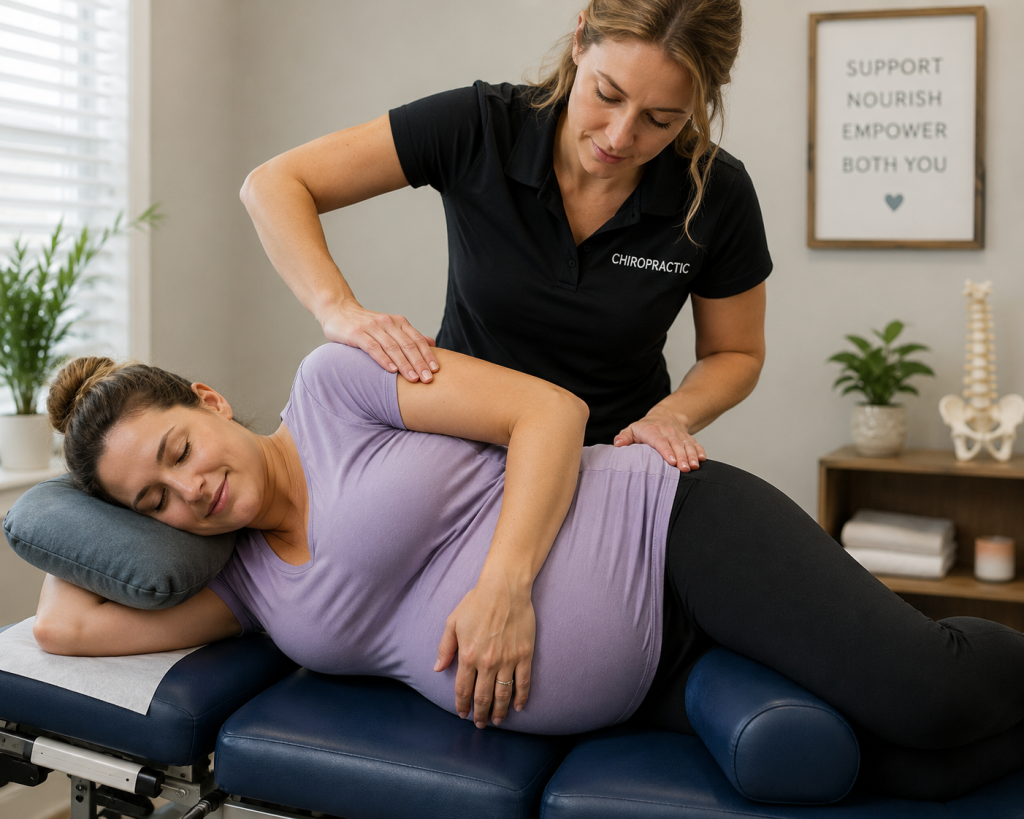
Pregnancy is an exciting time, but it also places new demands on a woman’s body. From back pain to posture changes, many Burlington mothers experience discomfort before and after childbirth. At Life Chiropractic Centre, we provide safe, gentle chiropractic care designed to support women through every stage of pregnancy and postpartum recovery.
Why Chiropractic Care During Pregnancy Matters
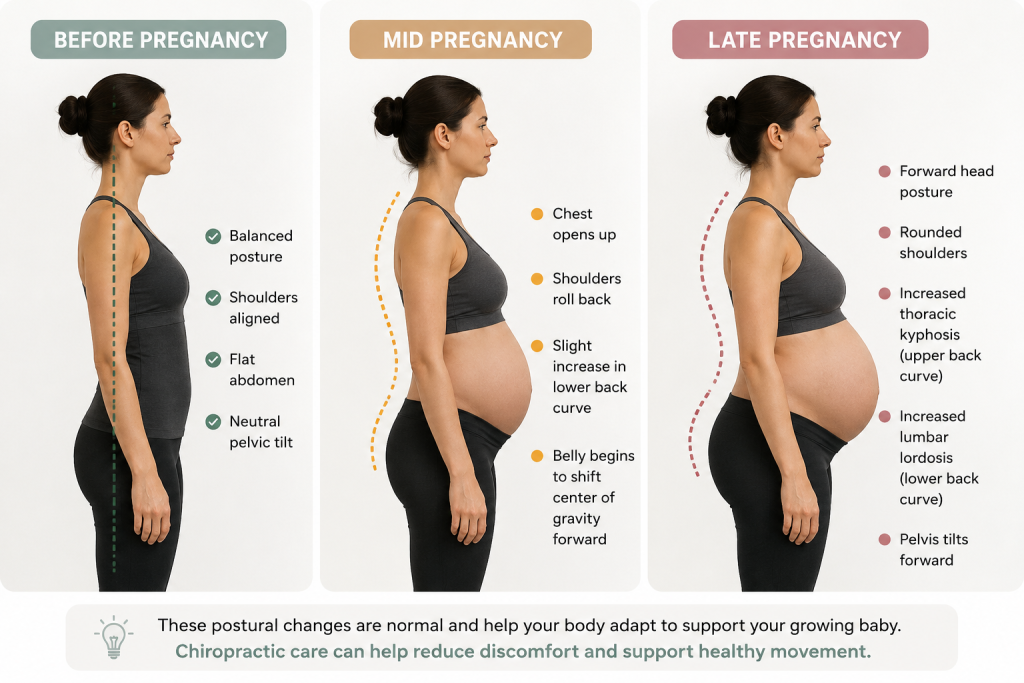
As the body changes, so does the spine and pelvis. This can lead to:
Back pain and pelvic discomfort
Poor posture and balance
Sleep difficulties
Sciatica and nerve pressure
Increased stress and fatigue
Chiropractic care helps restore alignment, reduces discomfort, and promotes overall wellness throughout pregnancy.
Benefits of Chiropractic Care for Pregnancy in Burlington
Expecting mothers who receive chiropractic care often experience:
Relief from lower back and hip pain
Better posture as the baby grows
Improved pelvic alignment for a smoother delivery
Reduced stress and improved relaxation
Better sleep and energy levels
Our techniques are gentle and specifically designed for pregnant women, ensuring safe and effective care.
Postpartum Chiropractic Care
After childbirth, a woman’s body continues to adjust. Hormonal changes, breastfeeding posture, and caring for a newborn can all place stress on the spine. Chiropractic care during the postpartum period may help with:
Faster recovery and improved mobility
Relief from back, neck, and shoulder tension
Better posture while feeding and carrying a baby
Reduced stress and enhanced energy
Support for emotional well-being
With proper care, mothers can recover more comfortably and focus on bonding with their newborn.
FAQs About Pregnancy & Postpartum Chiropractic Care
Is chiropractic safe during pregnancy? Yes. At Life Chiropractic Centre in Burlington, we use specialized techniques tailored to expectant mothers.
When should I start chiropractic care during pregnancy? You can begin at any stage, but many women find relief starting in the second trimester.
Can chiropractic help with postpartum recovery? Absolutely. Chiropractic care supports healing, posture, and stress relief after childbirth.
Conclusion: Supporting Burlington Moms Naturally
Pregnancy and postpartum life bring incredible changes—and chiropractic care can help mothers navigate them with greater comfort and health. At Life Chiropractic Centre, our focus is on safe, gentle, and supportive care for women before and after childbirth.
Families in Burlington are busier than ever, balancing school, work, and daily responsibilities. Amid the rush, health and wellness often get pushed aside. At Life Chiropractic Centre, we believe chiropractic care is not just for individuals—it’s a family-centered approach to wellness that benefits everyone from kids to seniors. Here’s what you need to know about how chiropractic care can keep your whole family healthy, active, and thriving.
Why Families in Burlington Choose Chiropractic Care
Chiropractic care supports the nervous system, which controls every function in the body. Families who receive regular care often notice:
Better posture and spinal alignment
Relief from headaches, back pain, and tension
Improved sleep and higher energy levels
Enhanced athletic performance for kids and teens
Stronger mobility and flexibility for seniors
This makes chiropractic an effective way to improve overall health and prevent issues before they begin.
Posture problems from heavy backpacks or screen time
Growing pains and sports-related strains
Fewer colds and stronger immune function
Better focus and concentration at school
Our techniques are always age-appropriate, ensuring safe and gentle care for young patients.
Chiropractic Care for Parents
Work stress, long commutes, and desk jobs take a toll on parents’ bodies. Common issues include back pain, neck stiffness, and fatigue. Chiropractic care helps parents by:
Relieving daily aches and tension
Reducing stress naturally
Supporting better posture at work and home
Boosting energy for family time
With consistent care, parents feel more energized and present in their daily lives.
Chiropractic Care for Seniors
Grandparents and older family members often face challenges with mobility, balance, and stiffness. Chiropractic care offers seniors in Burlington:
Improved flexibility and movement
Less joint discomfort and stiffness
Better balance and fall prevention
Enhanced independence and quality of life
This makes chiropractic an important part of family-centered wellness.
FAQs About Family Chiropractic in Burlington
Is chiropractic safe for kids and seniors? Yes. At Life Chiropractic Centre, we tailor care to every age group using gentle, safe techniques.
Can the whole family come for chiropractic care? Absolutely. Many families in Burlington visit together to make wellness part of their lifestyle.
How often should families schedule visits? It depends on each family member’s needs, but regular visits help maintain long-term health.
Conclusion: Family Wellness at Life Chiropractic Centre
Family-centered chiropractic care is about keeping everyone in your home healthier and more resilient. From children to seniors, every member of your family can benefit from better posture, improved energy, and natural stress relief.
Struggling with poor sleep is common for many Burlington residents. Whether it’s due to stress, back pain, or poor posture, restless nights can take a toll on your health and energy. At Life Chiropractic Centre, we believe better sleep starts with a healthy spine and nervous system. Chiropractic care provides a natural, holistic way to improve sleep quality without relying on medication.
The Link Between Sleep and Spinal Health
Your spine houses the nervous system, which controls sleep cycles and relaxation. Misalignments, also known as subluxations, may cause:
Discomfort that prevents restful sleep
Increased stress and tension
Poor circulation and restricted nerve flow
Headaches or nighttime restlessness
Chiropractic adjustments gently restore alignment, helping your body relax naturally so you can sleep better.
Benefits of Chiropractic Care for Sleep
Residents in Burlington often notice these improvements after starting chiropractic care:
Reduced neck and back pain that disrupts sleep
Fewer tension headaches and migraines
Lower stress and anxiety levels
Improved breathing and circulation
Enhanced overall relaxation before bedtime
By treating the root cause of discomfort, chiropractic care supports long-term sleep health.
Chiropractic as a Holistic Approach
Chiropractic isn’t just about adjustments. At Life Chiropractic Centre in Burlington, we use a whole-body approach to sleep health that includes:
Posture correction to reduce nighttime strain
Lifestyle tips for stress management
Exercises to relax muscles before bed
Ergonomic advice for better sleeping positions and pillows
This combination allows you to get the deep, restorative rest your body needs.
FAQs About Chiropractic and Sleep
Can chiropractic replace sleep medications? No, but it can help address the underlying causes of poor sleep naturally.
How quickly will I notice better sleep? Many Burlington patients notice improvements within a few adjustments, though results vary.
Is chiropractic safe for those with chronic insomnia? Yes. Our care is gentle and customized, focusing on natural relief and whole-body wellness.
Can stress-related sleep problems improve with chiropractic? Absolutely. Chiropractic helps reduce tension and supports mind-body balance, improving stress-related sleep issues.
Conclusion: Sleep Better, Live Better in Burlington
Quality sleep is essential for overall health and happiness. If you’re struggling with restless nights, chiropractic care may be the natural solution you’ve been looking for. At Life Chiropractic Centre , we’re committed to helping you achieve better rest through safe, holistic care.
Families in Burlington are busier than ever, balancing school, work, and extracurricular activities. With so many demands, health and wellness often take a backseat. At Life Chiropractic Centre, we believe family chiropractic care is one of the best ways to keep everyone—from kids to seniors—healthy, active, and thriving. Here’s what Burlington parents should know about the benefits of chiropractic care for the whole family.
Why Families in Burlington Choose Chiropractic Care
Chiropractic care is not just for back pain. It supports the nervous system, which controls every function in the body. By keeping the spine aligned, families often notice:
Better posture and spinal health
Fewer headaches and less muscle tension
Improved energy and sleep quality
Faster recovery from injuries
Support for growth and development in children
For parents, this means fewer health setbacks and more quality time with loved ones.
Posture issues from carrying heavy backpacks or screen use
Growing pains and sports-related strain
Improved focus and concentration at school
Fewer colds and stronger immune system support
Our approach is always age-appropriate, with light techniques tailored to a child’s unique needs.
Chiropractic Care for Parents
Parents often carry the weight of stress, long commutes, and desk jobs. Over time, this leads to tension headaches, back pain, and fatigue. Chiropractic care helps parents by:
Relieving everyday aches and stiffness
Improving sleep and energy levels
Supporting better posture at work or home
Providing stress relief naturally
With regular care, parents can stay energized and present for their families.
This makes chiropractic care an important wellness tool for the entire family unit.
FAQs About Family Chiropractic in Burlington
Is chiropractic safe for kids and seniors? Yes. Adjustments are customized for each age group, using safe and gentle techniques.
How often should families see a chiropractor? It depends on individual needs, but many families benefit from regular wellness visits to stay proactive.
Can chiropractic replace traditional medical care? No. Chiropractic complements medical care by supporting natural healing and prevention.
Do family plans exist for chiropractic care? At Life Chiropractic Centre, we make care accessible for families with plans designed to fit your needs.
Conclusion: Whole-Family Wellness in Burlington
Chiropractic care is more than just pain relief—it’s about keeping your entire family healthy, active, and resilient. From children to grandparents, everyone can benefit from improved posture, stress relief, and overall wellness.
At Life Chiropractic Centre in Burlington, we’re here to help families live healthier lives together.